Breast Reduction
Breast reduction removes excess breast tissue, fat and skin, and lifts and reshapes what remains. It is performed for symptoms as often as for appearance — neck, shoulder and back pain, bra strap grooving, rashes beneath the breast, and difficulty exercising. At Naficy Plastic Surgery & Rejuvenation Center in Bellevue, breast reduction is performed by Keith Hurvitz, MD, FACS, certified by both the American Board of Plastic Surgery and the American Board of Otolaryngology. He tailors the technique to each patient rather than using one method for everyone, and keeps the nipple alive on its own blood supply rather than removing and regrafting it. Fees start at $10,000. Dr. Hurvitz is not contracted with any insurance plans, though patients may submit for reimbursement independently.
What is a breast reduction?
Breast reduction, or reduction mammoplasty, makes the breast smaller and lighter. Excess breast tissue, fat and skin are removed, the remaining tissue is reshaped, the nipple and areola are moved to sit at the fullest part of the new breast, and the areola is usually reduced in diameter.
Every breast reduction includes a lift. That is not an optional add-on — removing weight from a breast without repositioning it would leave a smaller breast in the same low position. If you are considering reduction, you are also getting the benefit of a breast lift.
Will breast reduction help my neck, shoulder and back pain?
This is the question most patients arrive with, and it deserves a direct answer rather than a hedge.
Dr. Hurvitz’s answer: “In my 20 years of performing breast reductions, my patients have reported significant help with neck, shoulder, and back pain.”
Large, heavy breasts pull the shoulders forward and down and load the cervical and thoracic spine continuously. The symptoms that follow are familiar to anyone living with them: aching across the upper back and shoulders, neck pain and headaches, deep grooves worn into the shoulders by bra straps, skin irritation or rashes in the fold beneath the breast, numbness or tingling in the arms, and difficulty finding clothing or exercising comfortably.
Reduction addresses the cause rather than the symptom, which is why relief is so commonly reported. It is not a guarantee — pain has multiple sources, and pain that originates in the spine itself will not be resolved by changing breast weight.
Does insurance cover breast reduction?
The honest answer, and the one most practice websites avoid giving:
Dr. Hurvitz is not contracted with any insurance plans. Breast reduction here is a self-pay procedure.
Patients can independently submit for reimbursement on their own. Whether you receive anything back depends entirely on your plan — whether it has out-of-network benefits, whether it covers reduction at all, and whether your documentation satisfies its medical necessity criteria. Some plans reimburse a portion. Others reimburse nothing. That decision is between you and your insurer, and the practice cannot influence it or predict it.
Two practical points. Insurers that do cover reduction generally require documentation of symptoms, a record of conservative treatment attempts such as physical therapy, and a minimum amount of tissue removed — and their thresholds vary. And be aware that a plan’s coverage criteria may push toward removing more tissue than you actually want removed. That is worth thinking through before you start, because the operation should be planned around the result you want, not around an insurer’s threshold.
How is a breast reduction performed?
The technique is patient-dependent. Dr. Hurvitz does not use one method for every patient. The right approach depends on how much tissue is being removed, how far the nipple has to move, breast shape, skin quality and what you want the result to look like.
The two most commonly used incision patterns are:
| Pattern | Where the scar sits | Typically used when |
|---|---|---|
| Vertical (lollipop) | Around the areola and vertically down to the fold beneath the breast | Moderate reductions. Less scarring, and reshapes the breast from within. |
| Wise pattern (anchor) | Around the areola, vertically down, and horizontally along the fold | Larger reductions and substantial excess skin. The most tissue removal and the most control over the final shape. |
Surgery is performed under general anesthesia as an outpatient procedure. You go home the same day.
What happens to the nipple during a breast reduction?
This distinction matters more than most patients realise when comparing surgeons.
In a standard reduction, the nipple and areola are never detached. They stay connected to the breast on a pedicle — a column of tissue carrying their blood supply and nerves — and are moved upward along with it. In a free nipple graft, by contrast, the nipple is cut away entirely and replaced as a skin graft. That technique is sometimes used in very large reductions, but it reliably eliminates sensation and the ability to breastfeed, and the nipple often loses pigment and projection.
Dr. Hurvitz does not routinely combine breast reductions with free nipple grafts. In his words: “I keep the patient’s nipple alive during the reduction.”
If you are researching reduction and a surgeon proposes a free nipple graft, it is reasonable to ask why, and whether a pedicle technique is possible in your case.
How much tissue will be removed, and what size will I be?
The amount removed is based on the patient’s preference. This is a conversation, not a formula. Some patients want the largest reduction their anatomy safely allows; others want to stay proportionally larger and simply relieve the weight.
What can be achieved is bounded by anatomy — how much tissue is present, where the nipple sits, the quality of the blood supply, and how much skin can be removed while still closing safely. Within those limits, the target is yours to set.
A caution on cup sizes: they are not a reliable surgical target. Cup sizing varies substantially between manufacturers, and two women wearing the same labelled size can have very different breast volumes. It is more useful to describe the result you want in proportion to your frame, and to look at photographs together.
Can liposuction be combined with breast reduction?
Yes. Dr. Hurvitz combines reduction with liposuction of the axillary tail and lateral chest where it is useful.
The axillary tail is the extension of breast tissue that runs toward the armpit. It is a common source of dissatisfaction after reduction, because a breast can be made appreciably smaller while fullness in that area remains — producing bulging above and beside the bra line. Addressing it at the same operation avoids that.
What will the scars look like?
Breast reduction leaves permanent scars. There is no version of this operation that does not, and anyone considering it should weigh that honestly against the symptoms they are living with.
Scars typically appear pink and firm for the first several months, then soften and fade over roughly a year to eighteen months. Final appearance depends substantially on individual healing, and some people scar more visibly than others regardless of technique. Most patients who had significant symptoms describe the trade as an easy one, but it should be an informed choice rather than a surprise.
What are the risks of breast reduction?
- Permanent scarring, with pattern determined by the size of the reduction
- Changes in nipple and breast sensation, which can be permanent
- Difficulty or inability to breastfeed afterward
- Delayed wound healing, particularly where the vertical and horizontal incisions meet in a Wise pattern
- Partial or, rarely, complete loss of the nipple and areola from compromised blood supply
- Asymmetry in size, shape, nipple position or areolar diameter
- Fat necrosis, producing firm lumps within the breast that may take months to resolve
- Bleeding or hematoma, which may require a return to the operating room
- Infection
- Dissatisfaction with the final size, in either direction
- The need for revision surgery
- Anesthetic risk, and the general risks of any surgical procedure
Will I be able to breastfeed after a breast reduction?
Breastfeeding is sometimes still possible, because the nipple remains attached to the breast on its pedicle and a proportion of the ducts and glandular tissue is preserved. It is less reliable than after a lift alone, since more glandular tissue is removed, and it cannot be guaranteed.
If future breastfeeding is important to you, say so at consultation. It is relevant to technique and to how much tissue is removed, and it is a reason to prefer a pedicle technique over a free nipple graft.
On sensation: there is always a risk of nipple sensation being affected by any breast surgery. It may be reduced, heightened or patchy in the early months and usually settles over time, but change can be permanent.
What is recovery from breast reduction like?
| Time after surgery | What to expect |
|---|---|
| Day of surgery | Home the same day. A responsible adult must drive you and stay with you overnight. |
| Days 1–3 | Peak soreness. Many patients notice the weight relief immediately, even through the discomfort. Short walks encouraged from the first day. Supportive surgical bra worn continuously. |
| Days 4–7 | Discomfort noticeably decreasing. Most patients return to non-strenuous desk work near the end of this week or shortly after. |
| Weeks 2–3 | Swelling subsiding. Breasts still sitting high and looking boxy — this is normal and not the final shape. Walking. |
| Weeks 3–4 | Light cardio resumed. |
| Week 6 | Chest strengthening and heavier lifting generally resumed after this point, on Dr. Hurvitz’s clearance. |
| Weeks 6–12 | Tissue softens and the breast settles into its final shape. Full unrestricted training at about six to eight weeks. |
| 3–6 months | Shape considered settled. Scars still maturing and often at their most noticeable. |
| 12–18 months | Scars reach final appearance. |
Who is a good candidate for breast reduction?
- Breast size causing neck, shoulder or back pain, bra strap grooving, rashes beneath the breast, or difficulty exercising
- Bothered by breast size in proportion to your frame
- Physically healthy, at a stable weight, and not currently pregnant or breastfeeding
- Current on age-appropriate mammography
- A non-smoker, or willing to stop well in advance of surgery and stay off nicotine through healing
- Accepts permanent scarring in exchange for symptom relief and a change in size
- Has finished having children, or accepts that a future pregnancy may change the result
Who is not a good candidate?
- Anyone unwilling to accept a scar. Breast reduction always leaves permanent scars, and larger reductions leave longer ones. If that is unacceptable, this is the wrong operation regardless of the symptoms.
- Active smokers unwilling to stop. Nicotine constricts the small vessels supplying the pedicle. In an operation where nipple blood supply is the principal serious risk, this matters more than in most procedures.
- Patients whose weight is still changing significantly, or who are planning pregnancy in the near future. Both will change breast volume and the result.
- Anyone with an untreated breast lump, an abnormal mammogram or an unexplained finding. That is worked up first, without exception.
- Patients expecting insurance to pay. Dr. Hurvitz is not contracted with any insurance plan. If coverage is essential to your decision, you need to know that before scheduling rather than after.
- Patients whose back and neck pain has been attributed to a spinal cause unrelated to breast weight. Reduction addresses load, not underlying spinal pathology.
- Anyone whose main goal is a smaller breast with no change in position. Reduction repositions as well as reduces; that is inherent to the operation.
Where another procedure would serve you better — a breast lift alone if size is not the problem, or liposuction where the issue is largely fat on the lateral chest — Dr. Hurvitz will tell you at the consultation rather than after.
How much does breast reduction cost in Bellevue?
| Breast reduction | Starts at $10,000 |
| Why it varies | Price varies based on examination — the technique required, the amount of tissue being removed, and whether liposuction of the axillary tail is combined |
| Insurance | Dr. Hurvitz is not contracted with any insurance plans. Patients may submit for reimbursement independently; whether anything is reimbursed depends on the individual plan. |
You receive an exact written quote after your consultation, once the surgical plan is set. See fees and payment policies, financing options and general pricing and purchasing terms.
Why choose Dr. Hurvitz for breast reduction?
- Certified by two American boards. Keith Hurvitz, MD, FACS is certified by the American Board of Plastic Surgery and the American Board of Otolaryngology — Head and Neck Surgery, and is a Fellow of the American College of Surgeons.
- Two decades of reduction experience. Practicing plastic surgery since 2007, with breast surgery a central part of that practice.
- The nipple stays alive on its own blood supply. He does not routinely use free nipple grafts, which sacrifice sensation and the possibility of breastfeeding.
- Technique matched to the patient, not one method applied to everyone.
- Reconstructive background. He served as Director of Breast Reconstruction at the Todd Cancer Institute at Memorialcare Long Beach Medical Center and as Chief of Plastic Surgery there from 2012 to 2024.
- Liposuction of the axillary tail combined where useful, addressing the fullness toward the armpit that reduction alone can leave behind.
- A clear answer on cost and insurance, given before you schedule rather than discovered afterward.
Where is the surgery performed?
Breast reduction is an outpatient procedure performed under general anesthesia in the practice’s on-site ambulatory surgery center at 1110 112th Ave. NE in Bellevue. The facility is Medicare-certified and Washington State accredited, with two fully equipped operating rooms and a dedicated anesthesia team. You go home the same day.
Operating in an accredited facility attached to the practice means the same nursing and anesthesia team works with Dr. Hurvitz on every case. Your anesthesia plan is reviewed with you before the day of surgery.
Breast reduction before and after photos
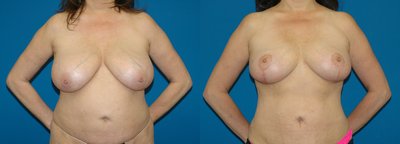
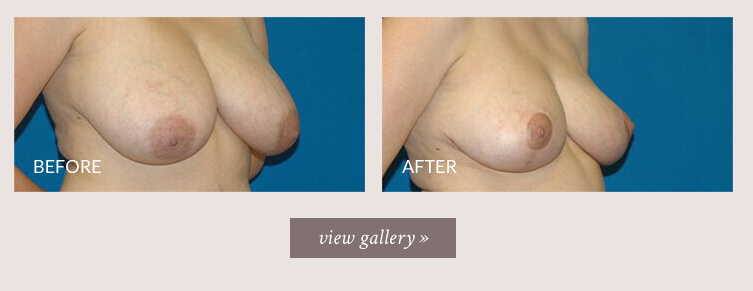
View the full breast reduction photo gallery. Photographs show actual patients of the practice and are published with consent. Results vary from patient to patient; no result shown should be taken as what you will achieve.
Breast reduction FAQ
Does insurance cover breast reduction?
Dr. Hurvitz is not contracted with any insurance plans, so breast reduction here is self-pay. You may submit a claim to your insurer independently for possible reimbursement, but whether anything is paid depends on your plan’s out-of-network benefits and its medical necessity criteria.
How much does breast reduction cost?
Fees start at $10,000 and vary based on examination — the technique required, how much tissue is removed, and whether liposuction is combined. You receive an exact written quote after consultation.
Will breast reduction fix my back and neck pain?
Dr. Hurvitz reports that over 20 years of performing breast reductions, his patients have reported significant help with neck, shoulder and back pain. It is not a guarantee, and pain originating in the spine itself will not be resolved by reducing breast weight.
Does a breast reduction include a lift?
Yes. Every reduction repositions the breast and the nipple as part of the operation. You do not need a separate lift.
Will my nipple be removed and reattached?
Not routinely. Dr. Hurvitz keeps the nipple alive on its own blood supply rather than removing it and replacing it as a graft. Free nipple grafting eliminates sensation and breastfeeding ability and is not his standard approach.
What size will I be afterward?
The amount removed is based on your preference, within what your anatomy safely allows. Cup size is not a reliable surgical target, since sizing varies between manufacturers — it is more useful to discuss proportion and look at photographs together.
How much tissue has to be removed?
There is no fixed requirement here, because this is a self-pay procedure. Insurers that cover reduction often impose minimum resection thresholds, which is worth understanding if you plan to submit a claim, since those thresholds may exceed what you actually want removed.
What will the scars look like?
Permanent, following either a vertical (lollipop) or Wise pattern (anchor) depending on the size of the reduction. Typically pink and firm for several months, then softening and fading over about a year to eighteen months.
Can I breastfeed after a breast reduction?
Sometimes. The nipple stays attached on its pedicle and some glandular tissue is preserved, but more tissue is removed than in a lift and breastfeeding is less reliable. It cannot be guaranteed. Tell Dr. Hurvitz if this matters to you.
Will I lose nipple sensation?
There is always a risk of sensation being affected by any breast surgery. It is often temporary and settles over months, but change can be permanent.
When can I go back to work?
Most patients return to non-strenuous desk work about a week after surgery, sometimes slightly longer for larger reductions. Physically demanding work takes longer.
When can I exercise again?
Walking within days, light cardio at about three to four weeks, chest strengthening and heavy lifting after six weeks with clearance, and full unrestricted training at about six to eight weeks.
Can liposuction be done at the same time?
Yes. Dr. Hurvitz combines liposuction of the axillary tail and lateral chest with reduction where useful, addressing the fullness toward the armpit that a reduction alone can leave behind.
Will my breasts sag again afterward?
Aging and gravity continue after any breast operation, but a lighter breast is carried better by the same skin, so reduction tends to hold its position longer than a lift alone on a heavy breast.
Should I wait until after I have children?
If pregnancy is likely in the near future, waiting is usually the better call. Pregnancy and breastfeeding change breast volume and skin quality and may change the result.
Do I need a mammogram before surgery?
Age-appropriate mammography is expected before breast surgery, and any lump or abnormal finding is worked up before an elective operation is scheduled.
Is breast reduction done under general anesthesia?
Yes, as an outpatient procedure in the practice’s on-site accredited surgery center. You go home the same day.
Next steps
To discuss breast reduction with Dr. Hurvitz, schedule a consultation at our Bellevue office, or complete the Surgical Consultation Intake Form in advance so your visit can focus on your plan rather than paperwork. If you have a question first, you can ask it here.
Naficy Plastic Surgery & Rejuvenation Center · 1110 112th Ave. NE, Suite 150, Bellevue, WA 98004 · (425) 450-0880
Medically reviewed by Keith Hurvitz, MD, FACS, board-certified plastic surgeon. Last reviewed August 2026.
This page is for general education and is not a substitute for a consultation. Insurance reimbursement decisions are made by your plan, not by this practice. Individual results vary.