Ultherapy
Ultherapy uses micro-focused ultrasound to heat tissue at three separate depths — including 4.5 mm, the SMAS layer a surgical facelift addresses. It is the only non-invasive device that reaches that depth. Results build over three to six months as new collagen forms. Naficy Rejuvenation Center in Bellevue, Washington performs approximately 500 Ultherapy treatments each year. Full face and neck is $4,500, with maintenance pricing from $575 through Ultherapy Boost.
Which should I have — Ultherapy, Thermage, or Fraxel?
These three treat different layers of skin. That is the entire basis for choosing between them, and it is why many of our patients use more than one.
| Ultherapy | Thermage FLX | Fraxel | |
|---|---|---|---|
| Energy | Micro-focused ultrasound | Monopolar radiofrequency | Fractional laser light |
| Depth reached | 1.5, 3.0 and 4.5 mm — including the SMAS | Dermis and subcutaneous tissue, to roughly 4.3 mm, heated in bulk | Epidermis and superficial dermis |
| Best at | Lifting — tightening the foundation layer | Tightening and smoothing across a broad area of skin | Surface — sun damage, pigment, texture, tone |
| Where we use it | Mostly face and neck, some chest | All over the body | Anywhere there is sun damage |
| Sessions | Typically one | Typically one | Usually a series |
| Downtime | None | None | About 5–6 days |
| Result appears | 3–6 months | 2–6 months | Days to weeks, building over months |
The practical logic: if your skin has descended and you want lift, Ultherapy. If your skin is lax and crepey over a broad area — or anywhere on the body — Thermage. If the problem is what you see on the surface rather than how it sits, Fraxel.
Many patients alternate between Ultherapy and Thermage precisely because they work at different layers. Treating the foundation one year and the dermis the next addresses more of the skin than repeating either alone.
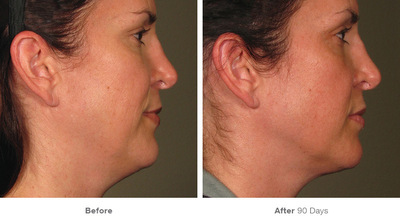
* Individual results may vary.
What is Ultherapy?
Ultherapy delivers focused ultrasound energy to a precise point beneath the skin, heating that point to roughly 65°C without touching the surface. That controlled thermal injury triggers the body to produce new collagen and elastin over the following months.
The distinguishing feature is depth control. Ultherapy treats at three discrete depths — 1.5 mm, 3.0 mm and 4.5 mm — selected by transducer. The 4.5 mm depth reaches the SMAS, the fibrous layer a facelift lifts and sutures. Radiofrequency devices and lasers are limited to the dermis, generally under 3 mm.
It also uses ultrasound imaging, so the provider sees the tissue layers on screen and confirms energy is being placed where intended rather than working blind.
Is Ultherapy a facelift?
No, and this is the most important expectation to set.
Ultherapy reaches the same layer a facelift addresses, but it tightens that layer rather than repositioning it. A facelift physically lifts descended tissue, removes excess skin, and produces a change of a different order that lasts a decade or more.
Ultherapy produces a modest, natural lift with no surgery, no incisions, and no downtime. It is well suited to patients with mild to moderate laxity who are not ready for surgery, and to patients who have had a facelift and want to maintain it. It is not a substitute for surgery in someone with significant jowling or a heavy neck — and we will tell you if that is what we see.
Does Ultherapy hurt? How we manage it
Ultherapy has a reputation for being uncomfortable, and that reputation is not unearned — the treatment works by depositing heat at depth, and you feel it. Practices vary enormously in how they handle this, and it is worth asking before you book anywhere.
We offer four options, used alone or in combination:
- Topical numbing — applied before treatment
- Zimmer cooling — chilled air directed at the treatment area during the procedure
- Nitrous oxide — self-administered, wears off within minutes
- IV sedation — for patients who want to be comfortable throughout, administered by a dedicated anesthesia provider in our on-site surgery center
Because we are a surgical practice with an accredited operating room and anesthesia staff, IV sedation is genuinely available — which is not the case at most medspas offering Ultherapy. If discomfort is the reason you have not had this treatment, that option exists.
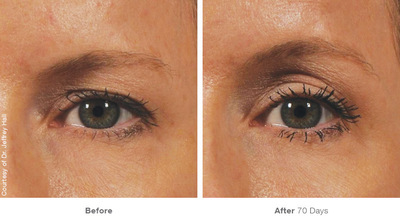
* Individual results may vary.
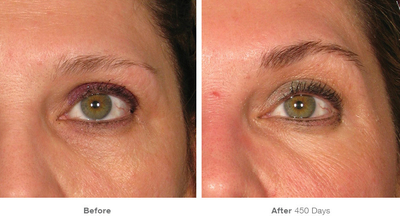
* Individual results may vary.
Where on the face and body can Ultherapy be used?
- Brow — lifting and opening the upper eyelid area
- Lower face and jawline — the most commonly treated area, for early jowling and definition
- Full face
- Neck — including under the chin
- Décolletage — for lines and crepiness on the chest
Ultherapy is used mostly on the face and neck, with some chest treatment. For laxity elsewhere on the body, Thermage is the appropriate technology.
How much does Ultherapy cost?
| Treatment area | Single session | Ultherapy Boost (maintenance) |
|---|---|---|
| Full face + full neck | $4,500 | $1,725 |
| Lower face + full neck | $3,750 | $1,500 |
| Full face | $3,250 | $1,500 |
| Lower face | $2,500 | $1,200 |
| Full neck | $2,000 | $575 |
| Brow | $550 | $200 |
Ultherapy Boost is maintenance pricing for returning patients — a lighter treatment at roughly a third to a half of the initial cost. Since most patients repeat every one to two years to hold their results, this materially changes the long-term arithmetic.
A $500 non-refundable deposit is required for single treatments of $1,000 or more.
Full non-surgical pricing · Current specials · Financing
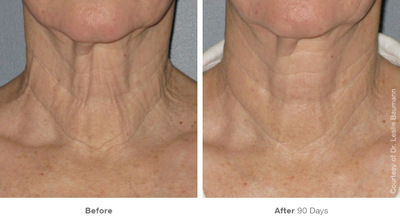
* Individual results may vary.
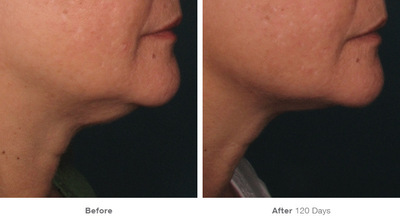
* Individual results may vary.
How many Ultherapy treatments will I need?
Typically one. Ultherapy is designed as a single treatment, and most patients get their full result from it.
Many patients then repeat every one to two years to maintain results, using Ultherapy Boost pricing. Ageing continues after treatment; a single session does not stop it.
Occasionally a second treatment is recommended within the first year where laxity is more advanced.
When will I see Ultherapy results?
| Time after treatment | What to expect |
|---|---|
| Immediately | Some patients notice a mild initial tightening. Return to normal activity the same day. Mild redness or swelling settles within hours. |
| Weeks 1–4 | Little visible change. Collagen production is underway. Tenderness to touch is normal, particularly along the jaw and neck. |
| Months 2–3 | The lift begins to show. Gradual, and usually noticed in photographs before the mirror. |
| Months 3–6 | Full result. This is when to judge the treatment. |
| 1–2 years | Results are maintained, then gradually give way to continued ageing. Most patients repeat at this point. |
The gradualness is the appeal for many patients: there is no day on which your appearance changed, and no downtime to explain.
How long does the Ultherapy procedure take?
Roughly 30 minutes for a limited area such as the neck or brow, and 60 to 90 minutes for a full face and neck. There is no recovery period — you can return to work, exercise and normal activity immediately.
Who is a good candidate for Ultherapy?
- Mild to moderate skin laxity — early jowling, a softening jawline, loosening under the chin
- Brow heaviness where a modest lift is wanted
- Lines and crepiness on the chest
- Patients not ready for surgery, or unwilling to accept surgical downtime
- Patients maintaining a previous facelift or neck lift
- Realistic expectations, and willingness to wait three to six months
Who is not a good candidate?
- Significant jowling, heavy neck skin, or substantial laxity. Ultherapy tightens; it does not remove skin or reposition descended tissue. In this patient it disappoints, and surgery is the honest recommendation.
- You want a result now, or have an event in the next three months.
- Your concern is volume loss. Hollow cheeks and temples need filler, Sculptra, or fat grafting. Tightening a deflated face does not fill it.
- Your concern is surface — sun damage, pigment, texture. That is Fraxel or laser resurfacing.
- Very thin patients with minimal soft tissue, where there is little to tighten.
- Open wounds, active infection, or severe cystic acne in the treatment area.
- Pregnancy or breastfeeding.
- Certain implanted electrical devices — disclose them.
What are the risks of Ultherapy?
Common and short-lived: redness for a few hours, mild swelling, tingling, and tenderness to touch for days to a couple of weeks — particularly along the jawline and neck.
Less common:
- Bruising, usually minor
- Temporary numbness in the treated area
- Small welts or raised areas, settling within hours
- Temporary nerve effects — muscle weakness or an asymmetric smile, uncommon and resolving over weeks
- Under-response — some patients simply do not produce as much collagen. This is the honest limitation of every energy device, and it cannot be predicted in advance
Rare: burns, scarring, or persistent nerve effects.
There is no reversal for an energy treatment. Unlike filler, it cannot be dissolved — but equally, nothing is left behind in the tissue.
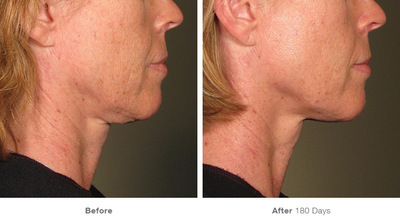
* Individual results may vary.
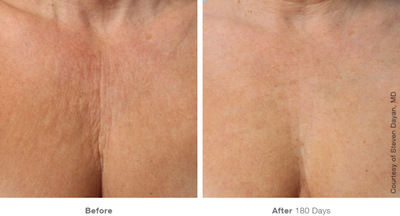
* Individual results may vary.
What can be combined with Ultherapy?
With Thermage: the most common pairing in this practice. Different depths, different layers — frequently alternated year to year.
With fillers or Sculptra: Ultherapy tightens, volume replaces what has been lost. Most patients over 45 need both.
With Botox: lifting from Ultherapy, movement from Botox.
With laser resurfacing or Fraxel: foundation from Ultherapy, surface from the laser. Together they cover the full thickness of the skin.
After a facelift: a common maintenance strategy, extending surgical results without further surgery.
Why have Ultherapy at a surgical practice?
Two reasons that matter.
Honest triage. A practice that only offers energy devices will recommend an energy device. We perform facelifts, so when we tell you Ultherapy will give you a worthwhile result, that assessment is not constrained by what we have available — and when we tell you it will not be enough, that is worth hearing before you spend $4,500.
Comfort options. IV sedation requires an accredited facility and anesthesia staff. Ours is Medicare-certified and Washington State–accredited, with an anesthesia team holding more than 50 years of combined experience.
We perform approximately 500 Ultherapy treatments each year, within a practice led by Sam Naficy, MD, FACS, board-certified by the American Board of Facial Plastic and Reconstructive Surgery.
Ultherapy before and after photos
Before and after photographs of Ultherapy at Naficy Rejuvenation Center. Results build over three to six months. Individual results vary.

Frequently asked questions about Ultherapy
How much does Ultherapy cost in Seattle?
At our practice, $4,500 for full face and neck, $3,250 full face, $2,500 lower face, $2,000 full neck, and $550 for the brow. Returning patients pay Ultherapy Boost pricing, from $200 to $1,725.
Does Ultherapy hurt?
It can be uncomfortable, because it works by heating tissue at depth. We offer topical numbing, Zimmer cooling, nitrous oxide, and IV sedation. The sedation option is available because we are a surgical practice with an accredited operating room.
How long does Ultherapy last?
Results typically hold for one to two years. Ageing continues, so most patients repeat at that point using Boost pricing.
When will I see Ultherapy results?
The lift builds over three to six months as collagen forms. Some patients notice mild initial tightening on the day, but that is not the result.
Is Ultherapy better than Thermage?
Neither is better — they work at different depths. Ultherapy reaches 4.5 mm including the SMAS and is best for lifting. Thermage heats the dermis more broadly and is better for overall tightening, and it can be used all over the body. Many of our patients alternate between them.
Is Ultherapy as good as a facelift?
No. Ultherapy tightens the foundation layer; a facelift repositions it and removes excess skin. Ultherapy produces a modest, natural lift with no downtime and lasts one to two years. A facelift is a different order of change lasting a decade or more.
Is there downtime after Ultherapy?
None. Return to normal activity the same day. Expect tenderness to touch for days to a couple of weeks.
How many Ultherapy sessions do I need?
Typically one, then maintenance every one to two years.
What areas can Ultherapy treat?
Brow, lower face and jawline, full face, neck and under the chin, and the décolletage. For the body, Thermage is the appropriate technology.
How long does the treatment take?
About 30 minutes for a limited area, 60 to 90 minutes for full face and neck.
Does Ultherapy work on everyone?
No. Response depends on your own collagen production, which varies and cannot be predicted beforehand. Patients with significant laxity generally do not get enough from it and are better served by surgery.
Can Ultherapy be done after a facelift?
Yes, and it is a common maintenance strategy for extending surgical results.
Is Ultherapy safe?
It is FDA-cleared with a long track record and does not break the skin. The main risks are temporary tenderness, swelling and numbness; temporary nerve effects are uncommon.
Can I have Ultherapy while pregnant?
No.
Next steps
The most useful thing a consultation does is establish whether tightening will actually give you what you want — or whether what is bothering you is volume loss, surface damage, or descent that needs surgery. Those are four different problems and only one of them is Ultherapy.
Naficy Rejuvenation Center is located in Bellevue, Washington, and serves patients from Seattle, the Eastside, and throughout the Pacific Northwest.
Schedule an appointment · Ask a question · Non-surgical pricing
Medically reviewed by Sam Naficy, MD, FACS, board-certified by the American Board of Facial Plastic and Reconstructive Surgery.