Intensive Fotofacial
An Intensive Fotofacial is photodynamic therapy — a light-activated medication called Levulan is applied to the skin before IPL treatment, which makes the light far more effective. Unlike a standard Fotofacial, this is used to treat actinic keratoses: precancerous sun-damaged lesions. It also treats acne and sun damage more aggressively. Expect several days of visible peeling. Treatment starts at $1,000 per session at Naficy Rejuvenation Center in Bellevue, Washington.
What is an Intensive Fotofacial?
It combines two things:
- Levulan (aminolevulinic acid), a topical solution applied to the skin and left to absorb. Abnormal and rapidly dividing cells — precancerous lesions, and the cells lining oil glands — take it up preferentially and convert it into a compound that is highly sensitive to light.
- Light activation, delivered with the IPL device. The light activates the compound, which destroys the cells that concentrated it while largely sparing normal skin.
That selectivity is the point. The medication does not target abnormal cells — the abnormal cells target the medication, by absorbing more of it. The light then acts only where it accumulated.
What does it treat that a standard Fotofacial does not?
Actinic keratoses. These are rough, scaly, often tender patches on sun-exposed skin — the scalp, face, ears, forearms and backs of the hands. They are precancerous: a proportion progress to squamous cell carcinoma if untreated, and they are the most common reason a dermatologist freezes lesions with liquid nitrogen.
Photodynamic therapy treats an entire field of sun damage rather than individual spots. That matters, because someone with visible actinic keratoses generally has many more developing that are not yet visible. Field treatment addresses what is coming as well as what is there.
It also treats, more aggressively than standard IPL:
- Acne — by targeting the sebaceous glands
- Extensive sun damage and pigmentation
- Rough, weathered skin texture
Is this covered by insurance?
No. We do not bill insurance for this treatment, and it is not covered here even though actinic keratosis treatment is a medical rather than cosmetic indication.
We state this plainly because it is a fair question and patients should know before they book. Photodynamic therapy for actinic keratoses is sometimes covered when performed elsewhere under dermatology — if insurance coverage is your priority, that is the route to pursue. Patients treat here because of the field-treatment approach, the cosmetic improvement that accompanies it, and the assessment that comes with a surgical practice.
How much does it cost?
| Treatment area | Single session | Package of 3 | Package of 6 |
|---|---|---|---|
| Small | $1,000 | $2,700 | $5,100 |
| Medium | $1,350 | $3,645 | $6,885 |
| Large | $1,750 | $4,725 | $8,925 |
A $500 non-refundable deposit is required for single treatments of $1,000 or more. Packages expire three years from purchase.
Full non-surgical pricing · Current specials · Financing
What is the treatment like?
- Preparation. The skin is cleansed and degreased so the medication absorbs evenly.
- Levulan application. The solution is applied and left to incubate. Incubation time varies with what is being treated and how aggressive a result is intended.
- Light activation. The IPL device delivers light to activate the medication. You may feel stinging, burning or tingling during this — more than a standard Fotofacial — and cooling is used.
- Immediately afterward. The skin is red and feels sunburned.
What is the recovery, and the one thing you must not do
This is not a no-downtime treatment, and that is the main practical difference from a standard Fotofacial.
| Time after treatment | What to expect |
|---|---|
| First 48 hours | Strict avoidance of sunlight and bright indoor light. Your skin remains photosensitised, and exposure during this window causes a severe reaction resembling a bad burn. Stay indoors, away from windows. |
| Days 1–3 | Marked redness and swelling, worst at 24 to 48 hours. Treated actinic keratoses become more inflamed and crusted than the surrounding skin — that is the treatment working. |
| Days 3–7 | Peeling and flaking. This is the visible phase and the reason to plan around social commitments. |
| Days 7–14 | New skin. Residual pinkness fades. Makeup can usually be worn once the surface is intact. |
| Weeks 2–8 | Continued improvement in tone, texture and clarity. |
To restate the important part: for 48 hours after treatment you must stay out of sunlight and strong indoor light entirely. This is not the usual advice about sun protection — the medication is still active in your skin, and sunscreen alone is not sufficient protection during that window.
How many treatments will I need?
Typically one to three sessions. Extensive actinic damage often needs more than one, spaced several weeks apart. Acne treatment is usually a short series.
Patients with significant sun damage frequently repeat annually, since new lesions continue to develop from cumulative past exposure.
Who is a good candidate?
- Actinic keratoses or a history of them — particularly a scattered field rather than one or two spots
- Extensive sun damage on the face, scalp, chest, forearms or hands
- Acne that has not responded to other treatment
- Fair skin with years of accumulated sun exposure
- Ability to stay out of light for 48 hours and accept several days of peeling
Who is not a good candidate?
- You cannot avoid light for 48 hours. This is not negotiable and is the most common reason to postpone.
- You cannot accommodate several days of visible peeling.
- Porphyria or another photosensitivity disorder.
- Known allergy to aminolevulinic acid.
- Photosensitising medications — some antibiotics, diuretics and others. Disclose everything you take.
- Darker skin types, where light-based treatment carries pigmentation risk.
- Pregnancy or breastfeeding.
- A suspicious lesion. Anything that might be a skin cancer is assessed and biopsied rather than treated with light. Photodynamic therapy treats precancerous lesions, not established skin cancer.
What are the risks?
Expected: redness, swelling, stinging, crusting over treated lesions, and several days of peeling.
Less common: severe phototoxic reaction from light exposure in the first 48 hours, blistering, temporary hyperpigmentation or hypopigmentation, and prolonged redness.
Rare: infection, scarring, and permanent pigment change.
An important limitation: photodynamic therapy does not treat established skin cancer, and it does not eliminate the need for ongoing skin checks. Anything that changes, bleeds or fails to heal should be examined regardless of previous treatment.
Intensive vs. standard Fotofacial
| Standard Fotofacial | Intensive Fotofacial | |
|---|---|---|
| What it is | IPL alone | IPL plus Levulan photodynamic therapy |
| Treats | Redness, brown spots, vessels | The same, plus actinic keratoses and acne |
| Downtime | Essentially none | 48 hours of light avoidance, then several days of peeling |
| Sessions | 3–6 | 1–3 |
| From | $400 | $1,000 |
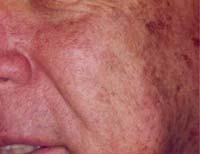
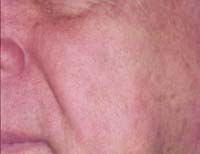
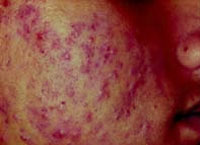
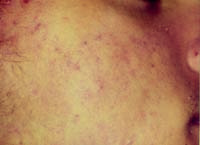
Intensive Fotofacial before and after photos
Before and after photographs of Intensive Fotofacial photodynamic therapy at Naficy Rejuvenation Center. Individual results vary.
Frequently asked questions
What is Levulan?
Levulan is aminolevulinic acid, a topical solution that abnormal and rapidly dividing skin cells absorb preferentially and convert into a light-sensitive compound. Light then destroys the cells that concentrated it.
What is photodynamic therapy?
A treatment combining a light-sensitising medication with a light source. The medication accumulates in target cells and the light activates it there, which is what makes it selective.
Does this treat precancerous lesions?
Yes. Photodynamic therapy treats actinic keratoses, which are precancerous sun-damaged lesions. It treats a whole field of damage rather than individual spots. It does not treat established skin cancer.
Is Intensive Fotofacial covered by insurance?
Not at our practice — we do not bill insurance for it. It is sometimes covered when performed under dermatology elsewhere.
How much does it cost?
$1,000 to $1,750 per session depending on area size, with package pricing for three and six sessions.
How long is the downtime?
48 hours of strict light avoidance, then several days of peeling. Most patients look normal within 7 to 10 days.
Why must I stay out of the sun for 48 hours?
The medication remains active in your skin during that window, so light exposure causes a severe phototoxic reaction. Sunscreen alone is not adequate protection — you need to stay indoors and away from windows.
Does it hurt?
More than a standard Fotofacial. Expect stinging or burning during light activation, managed with cooling.
How many treatments will I need?
Usually one to three. Patients with extensive sun damage often repeat annually.
Does it treat acne?
Yes, by targeting the sebaceous glands. It is an option for acne that has not responded to other treatment.
Next steps
A consultation establishes whether what you have is actinic damage suitable for field treatment, and whether anything present needs biopsy rather than light. It also confirms you can accommodate the 48-hour light restriction, which is the part patients most often underestimate.
Naficy Rejuvenation Center is located in Bellevue, Washington, and serves patients from Seattle, the Eastside, and throughout the Pacific Northwest.
Schedule an appointment · Ask a question · Standard Fotofacial
Medically reviewed by Sam Naficy, MD, FACS, board-certified by the American Board of Facial Plastic and Reconstructive Surgery.