Rhinoplasty
Rhinoplasty reshapes the nose to bring it into balance with the rest of the face, and can correct breathing problems at the same time. Sam Naficy, MD, FACS performs 150 to 180 rhinoplasty procedures each year in Bellevue, Washington — roughly 30 times the volume of the average ASPS member surgeon. Surgery takes 2 to 3 hours, an external splint is worn for 5 to 7 days, and most patients return to work at about one week.
What is rhinoplasty?
Rhinoplasty is surgery to change the shape, size, or proportion of the nose. The name is a blend of rhino (nose) and plasty (to mold or shape). It is the most commonly performed procedure in facial plastic surgery, and by a wide margin the most technically demanding — millimetre changes are visible, the framework being altered also has to keep working as an airway, and the result has to still look like the patient.
Rhinoplasty may be performed for purely cosmetic reasons, purely for breathing (septoplasty), or — most commonly — for both at once. The goal at Naficy Plastic Surgery is a nose that looks natural and in harmony with the eyes and lips, without an operated-on appearance. A good result is as much about what you do not notice as what you do.
Open vs. closed rhinoplasty: what is the difference?
The difference is one small incision. In a closed (endonasal) rhinoplasty, all incisions are placed inside the nostrils and the skin is never fully lifted off the framework. In an open (external) rhinoplasty, those same internal incisions are joined by a small incision across the columella — the strip of skin between the nostrils — which allows the skin to be folded upward and the entire framework of the nose to be seen directly.
| Open (external) rhinoplasty | Closed (endonasal) rhinoplasty | |
|---|---|---|
| Incisions | Inside the nostrils plus a small incision across the columella | Inside the nostrils only |
| External scar | Yes — typically fades to a barely visible line | None |
| Visibility for the surgeon | Direct view of the entire framework | Limited; much is done by feel |
| Grafting and suturing | Precise placement under direct vision | More difficult, particularly complex grafts |
| Best suited to | Tip work, asymmetry, crooked noses, revision cases, structural grafting | Limited dorsal work in a straight, symmetric nose |
| Swelling of the tip | Somewhat more, and slower to resolve, but typicaly a minor issue | Somewhat less |
Dr. Naficy uses the open approach for most primary rhinoplasty. The reason is control. Most of what patients want changed is in the tip, and the tip is where precision matters most — cartilage has to be reshaped, repositioned, and often grafted, and doing that accurately requires seeing it. The trade-off is a small columellar incision, which in the great majority of patients heals to a line that is difficult to find on close inspection, and slightly more tip swelling that resolves over the first several months.
Any surgeon who performs only one approach is selecting the operation to fit their preference rather than your anatomy. The right question at consultation is not open or closed, but what needs to change in your nose and what access that work requires.
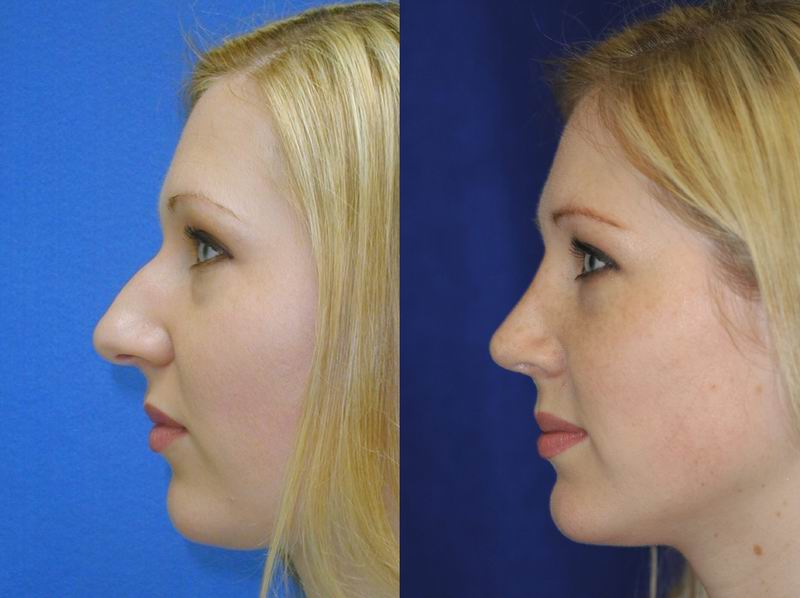
Rhinoplasty by Seattle facial plastic surgeon Dr. Sam Naficy. * Individual results may vary.
What can rhinoplasty achieve?
Many features of the nose can be changed. Noses may be made narrower, straighter, longer, or shorter. Humps may be removed, and the shape, size, angle, and definition of the tip may be altered. Breathing problems caused by a deviated septum, nasal valve collapse, or enlarged turbinates can be corrected during the same operation.
What rhinoplasty cannot do is give you someone else's nose. Skin thickness, cartilage strength, and underlying bone structure set real limits, and a nose has to fit the face it sits on. The art of rhinoplasty is achieving the desired change while keeping the result natural.
Who is a good candidate for rhinoplasty?
You are likely a good candidate if you have:
- A specific feature that bothers you and can be described — a hump, a drooping or wide tip, a crooked bridge, asymmetry
- Completed facial growth — generally age 15 to 16 in women and 16 to 17 in men
- Good general health and no uncontrolled medical conditions
- Realistic expectations, including an understanding that swelling resolves over a year and the final result takes time to appear
- Nasal obstruction alongside cosmetic concerns — these are efficiently corrected together
Who is not a good candidate for rhinoplasty?
- Facial growth is not complete. Operating before growth finishes risks a result that changes as the face matures.
- You cannot identify what bothers you. Patients who cannot articulate a specific concern are rarely satisfied by a specific correction.
- You are seeking a particular celebrity's nose. Noses are not transferable between faces; skin thickness and bone structure determine what is achievable on yours.
- You use nicotine in any form. Complete cessation is required for at least three weeks before and three weeks after surgery.
- Body dysmorphic disorder. Repeated dissatisfaction with an objectively normal appearance is not resolved by surgery and is typically made worse by it. This is a recognized reason to decline to operate.
- Uncontrolled hypertension, poorly controlled diabetes, or a bleeding disorder.
How is rhinoplasty performed?
Primary rhinoplasty takes 2 to 3 hours and is performed under general anesthesia or IV sedation, depending on the extent of the work and your health status.
- Incisions. Placed inside the nostrils, joined in the open approach by a small incision across the columella.
- Exposure. The skin is elevated off the underlying bone and cartilage framework.
- Reshaping the bridge. A hump made of bone, cartilage, or both is reduced. Where the bridge is too low, height is added using the patient's own cartilage.
- Reshaping the tip. Tip cartilages are sculpted, repositioned, and sutured to refine size, definition, and rotation. Structural grafts are added where support is needed.
- Straightening. In a crooked nose, the septum, the cartilages, and often the nasal bones all require repositioning.
- Airway. A deviated septum is straightened and enlarged turbinates reduced where these are contributing to obstruction.
- Closure and splinting. Incisions are closed with fine sutures. An external splint is applied and worn for 5 to 7 days. No packing is placed inside the nose.
The absence of nasal packing is worth noting, because packing is what most people have heard about and dread. Modern technique makes it unnecessary, and patients breathe through their nose during recovery.
What is rhinoplasty recovery like, week by week?
Most patients return to work and social activities at about one week, once the splint comes off. Bruising around the eyes, when present, is largely resolved by then. The nose continues to refine for a year or more.
| Time after surgery | What to expect |
|---|---|
| Days 1–3 | An external splint is in place. Swelling and any bruising around the eyes build and peak around day 3. Discomfort is usually described as congestion and pressure rather than pain. No packing is used, so you can breathe through your nose. Rest with the head elevated. |
| Days 4–7 | Bruising fades noticeably. The splint is removed between days 5 and 7, along with any external sutures. |
| Week 1–2 | Most patients return to work and social activity. Residual bruising is usually easy to cover with concealer or tinted sunscreen. The nose looks swollen but presentable. |
| Weeks 3–6 | Obvious swelling settles. Light to moderate exercise resumes with clearance. Glasses must be kept off the bridge or supported until cleared. |
| Months 2–6 | The nose looks normal to others. Tip definition continues to emerge as swelling resolves — the tip is always the last area to settle, and thicker skin takes longer. |
| Months 6–18 | Final refinement. The result is assessed at one year, and in thick-skinned or revision cases somewhat later. |
Patients travelling from out of the area are asked to remain locally for about one week, so the splint can be removed and the first follow-up completed before flying. See Out of Town Patients.
The photographs below were taken at only 7 days after rhinoplasty, at the time the splint was removed.
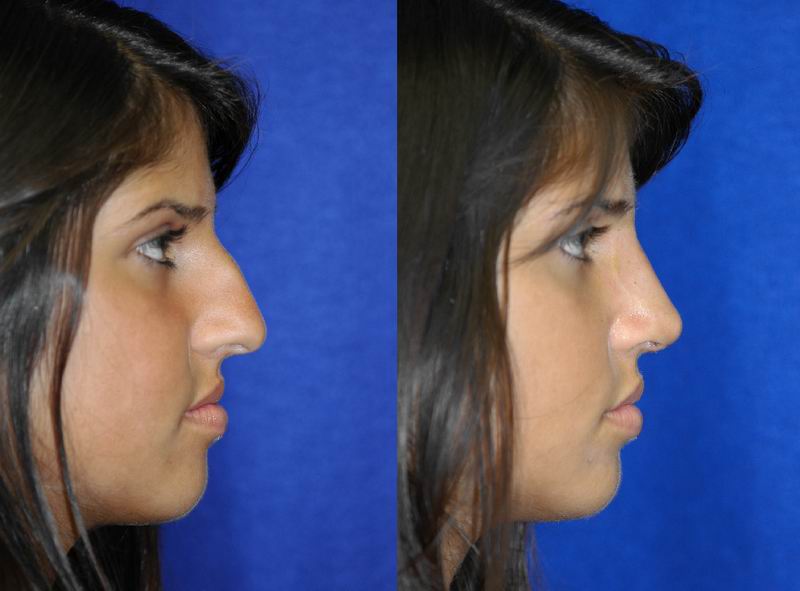
Only 7 days after Rhinoplasty by Seattle facial plastic surgeon Dr. Sam Naficy. * Individual results may vary.
Only 7 days after Rhinoplasty by Seattle facial plastic surgeon Dr. Sam Naficy. * Individual results may vary.
Rhinoplasty for a bump on the bridge
A dorsal hump is one of the most common reasons men and women seek rhinoplasty. The hump may be bone, cartilage, or more often a mixture of both, and reducing it requires working on both. Other profile features frequently need attention at the same time — particularly the angle between the nose and the upper lip, which strongly affects whether a profile reads as balanced.
Reducing a hump also narrows the bridge, which is why the nasal bones usually need to be repositioned in the same operation to avoid an open, flat-topped appearance.
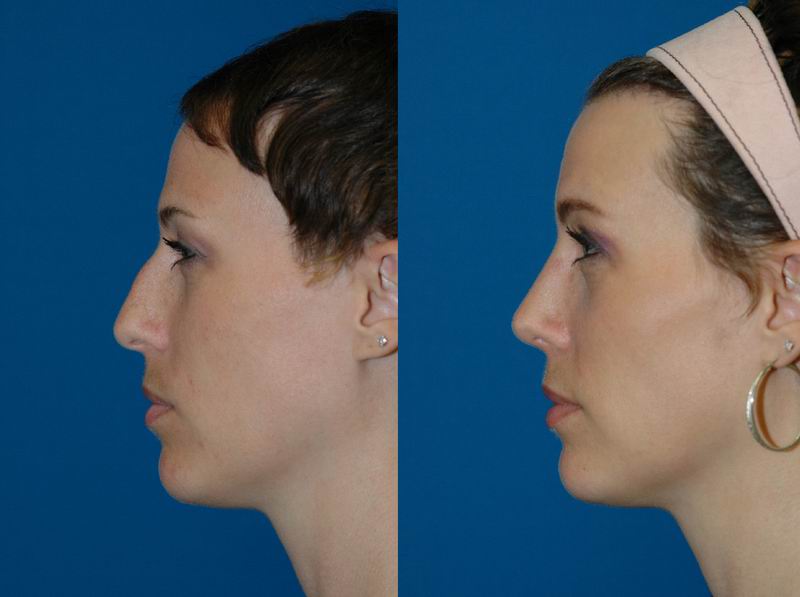
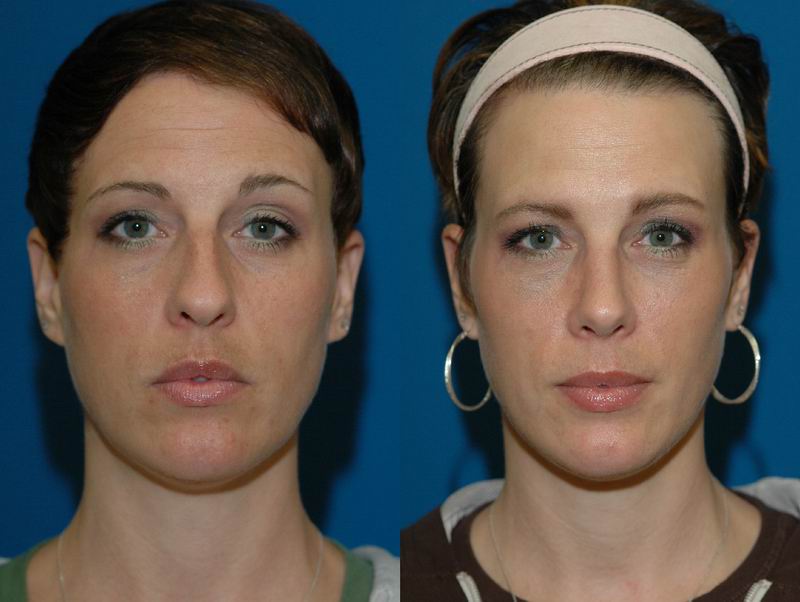
Rhinoplasty for bump on the bridge by Seattle facial plastic surgeon Dr. Sam Naficy. * Individual results may vary.
Rhinoplasty for a hooked or droopy tip
This is primarily a profile problem. The nasolabial angle — between the upper lip and the base of the nose — is ideally 90 to 105 degrees in women and 90 to 95 degrees in men. When that angle falls below 90 degrees, the tip reads as drooping, and the effect is often accentuated on smiling.
Correction usually requires more than hump removal. The tip itself must be reshaped and supported to produce a more favourable angle, which is a matter of restructuring cartilage rather than simply trimming it.
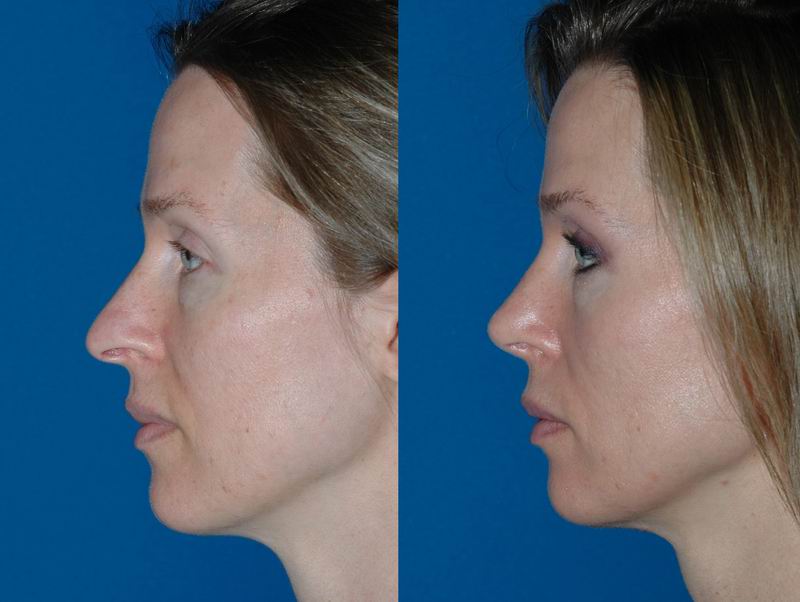
Rhinoplasty for hooked and droopy tip by Seattle facial plastic surgeon Dr. Sam Naficy. * Individual results may vary.
Rhinoplasty for a wide or round tip
Some noses show their most bothersome features from the front rather than in profile, and a tip that is too wide, round, or boxy is among the most common.
Correcting a wide tip requires reshaping and sculpting the tip cartilages to reduce bulk and improve definition — while preserving the structural support those cartilages provide. This is the balance that matters: aggressive trimming of tip cartilage narrows the nose in the short term and can collapse the nasal valve and obstruct breathing in the long term. Modern technique uses suturing and grafting to reshape the tip rather than simply removing cartilage.
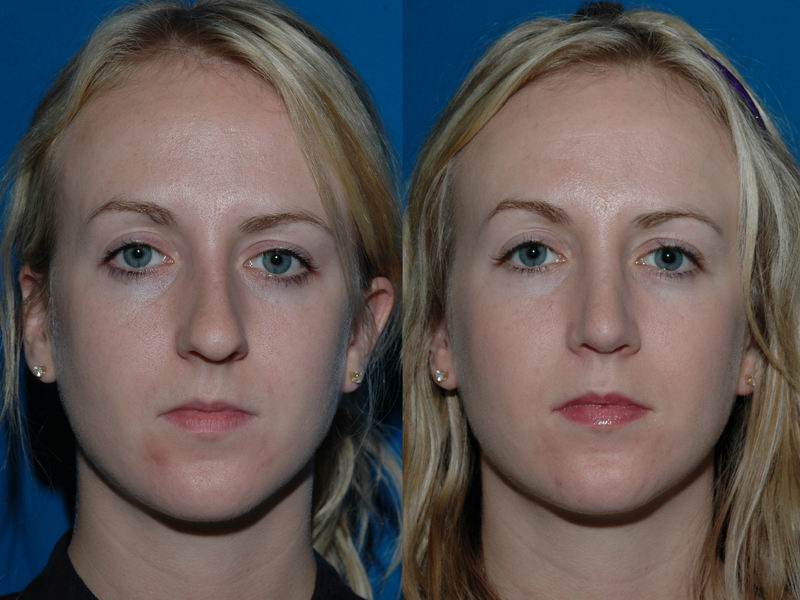
Rhinoplasty for wide round tip by Seattle facial plastic surgeon Dr. Sam Naficy. * Individual results may vary.
Rhinoplasty for a short or upturned nose
Sometimes the problem is that the nose is too short, too upturned, and unnatural in shape — often the result of a previous operation that removed too much. Lengthening a short nose is one of the most challenging problems in facial plastic surgery, because tissue has to be added and held in a new position against the tendency of scar to pull it back.
Dr. Naficy co-authored the peer-reviewed article establishing the techniques used for this problem, proposing an algorithm for selecting among five nasal lengthening methods based on the desired effect on tip rotation — including the flying buttress graft, caudal septal grafts, tip grafts, radix grafts, and interposition grafting.
Naficy S, Baker SR. Lengthening the short nose. Arch Otolaryngol Head Neck Surg. 1998 Jul;124(7):809–13. PMID 9677119
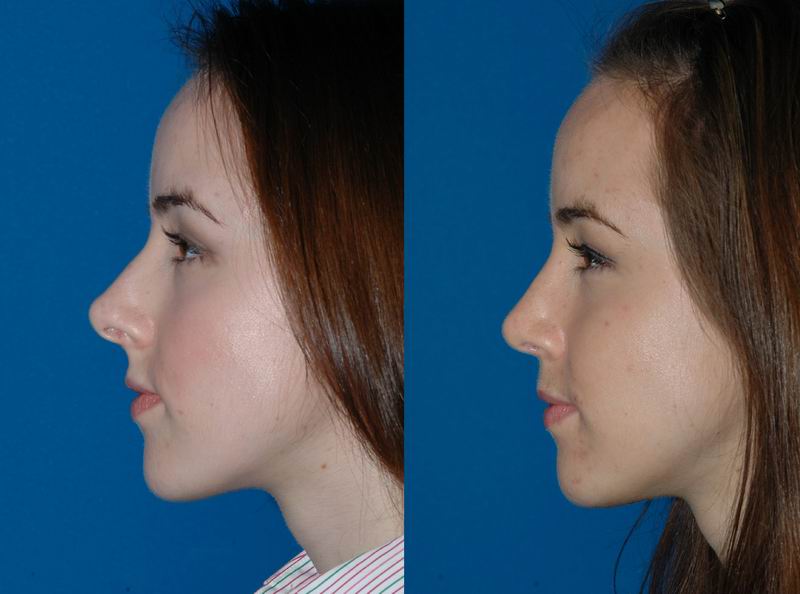
Rhinoplasty for short upturned nose by Seattle facial plastic surgeon Dr. Sam Naficy. * Individual results may vary.
Rhinoplasty for a low radix
The radix is the transition from the forehead to the nose. When it is set too deeply, the nose can look unnaturally short or the hump above it can look larger than it is. In these cases the correction is counterintuitive: rather than removing a hump, height is added at the radix using the patient's own cartilage, which lengthens the apparent dorsum and produces a more balanced profile.
Recognizing a low radix is one of the more common diagnostic misses in rhinoplasty. Treating the hump alone in such a nose over-reduces the bridge and produces a scooped, operated appearance.
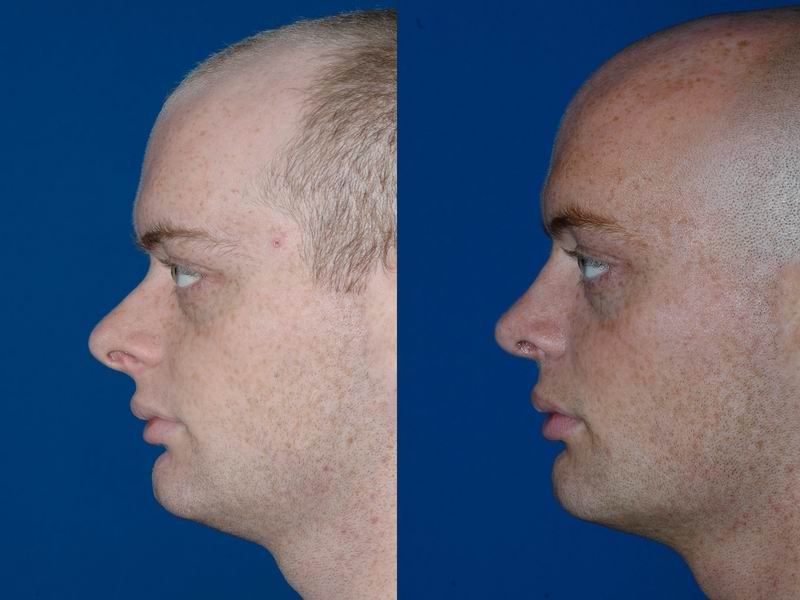
Rhinoplasty for a low radix by Seattle facial plastic surgeon Dr. Sam Naficy. * Individual results may vary.
Rhinoplasty for a crooked nose
A crooked, asymmetric, or deviated nose can throw the whole face off balance. The cause may be the septum, the external cartilages, the nasal bones, or underlying facial asymmetry — and frequently several at once. A severely deviated septum can push the lower half of the nose off centre, and noses that have been fractured are often crooked because the bones healed in a displaced position.
Straightening a crooked nose is among the most technically demanding rhinoplasty problems, typically requiring work on cartilage, bone, and septum together. Because a deviated septum is usually part of the picture, straightening it also improves the airway. Complete symmetry is not an achievable goal in any face; substantial improvement is.
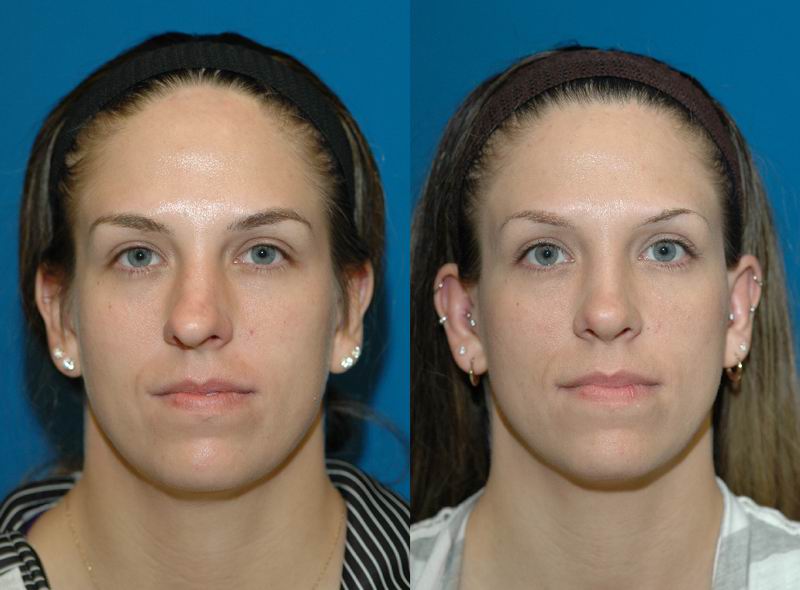
Rhinoplasty for a crooked nose by Seattle facial plastic surgeon Dr. Sam Naficy. * Individual results may vary.
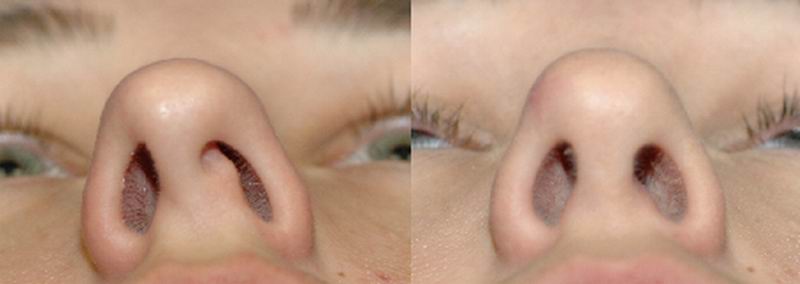
Rhinoplasty for a crooked nose by Seattle facial plastic surgeon Dr. Sam Naficy. * Individual results may vary.
Rhinoplasty in men
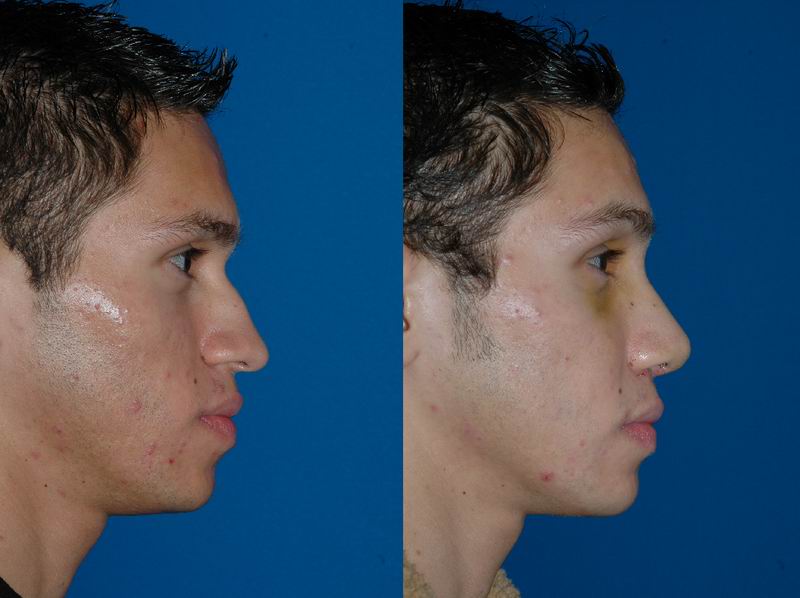
Male rhinoplasty shares much with female rhinoplasty but differs in aesthetic targets. Strength and symmetry matter most. The male nose should not be made too small, too narrow, or too upturned — each of which feminizes the face. The nasolabial angle should stay at 90 to 95 degrees, and a straight dorsum, rather than the slight concavity often desired in women, generally reads as masculine.
Men also tend to have thicker skin and stronger cartilage, which means changes show more slowly and structural support has to be correspondingly stronger.
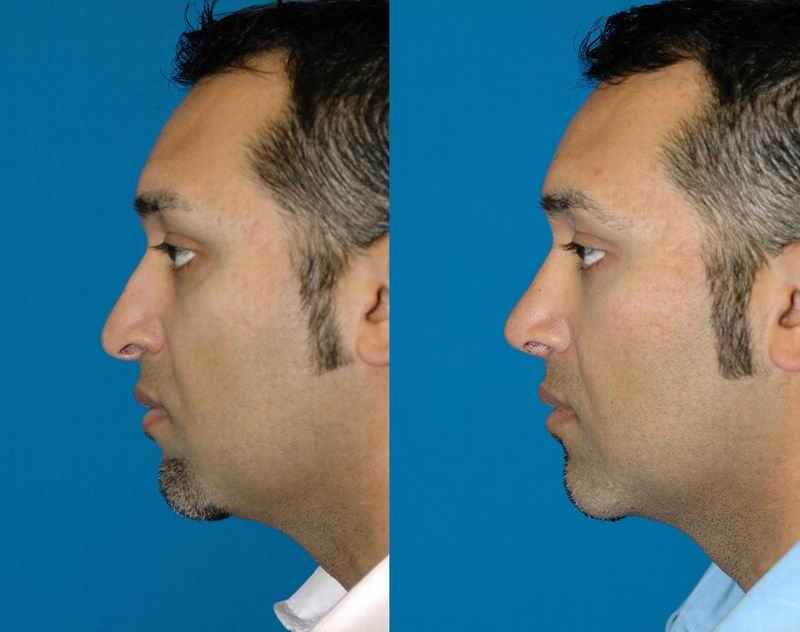
Male Rhinoplasty by Seattle facial plastic surgeon Dr. Sam Naficy. * Individual results may vary.
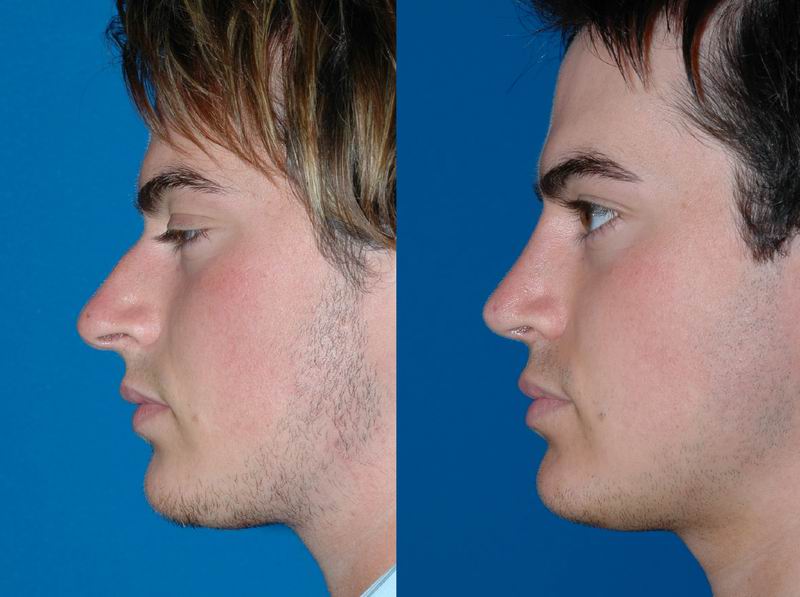
Male Rhinoplasty by Seattle facial plastic surgeon Dr. Sam Naficy. * Individual results may vary.
Revision rhinoplasty
Revision rhinoplasty corrects an unsatisfactory result from previous nasal surgery. Patients seek it either because the first operation did not fully correct the original problem, or because it created new ones — a residual hump, irregularity or asymmetry of the bridge, tip asymmetry, tip pinching or collapse, excessive nostril show from alar retraction or a hanging columella, or bossae.
Revision work is fundamentally a reconstruction problem. It typically requires a careful balance of removing and adding cartilage, and where septal cartilage has already been used, grafts may be harvested from the ear or rib. Dr. Naficy co-authored the chapters on cartilage grafts, bone grafts, and structural support in Principles of Nasal Reconstruction (Springer), and has an international revision clientele. In revision rhinoplasty, a very small change in the right location often makes a large difference.
Full detail: Revision Rhinoplasty.
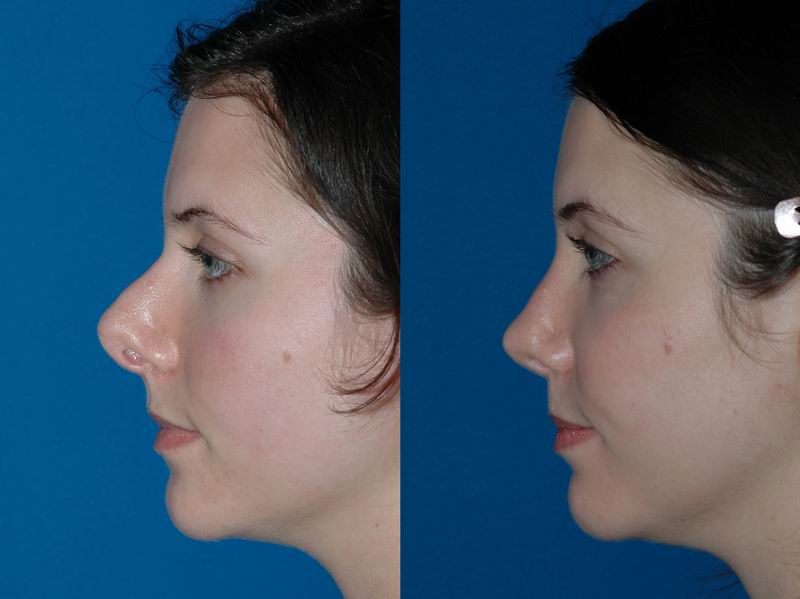
Revision rhinoplasty by Seattle facial plastic surgeon Dr. Sam Naficy. * Individual results may vary.
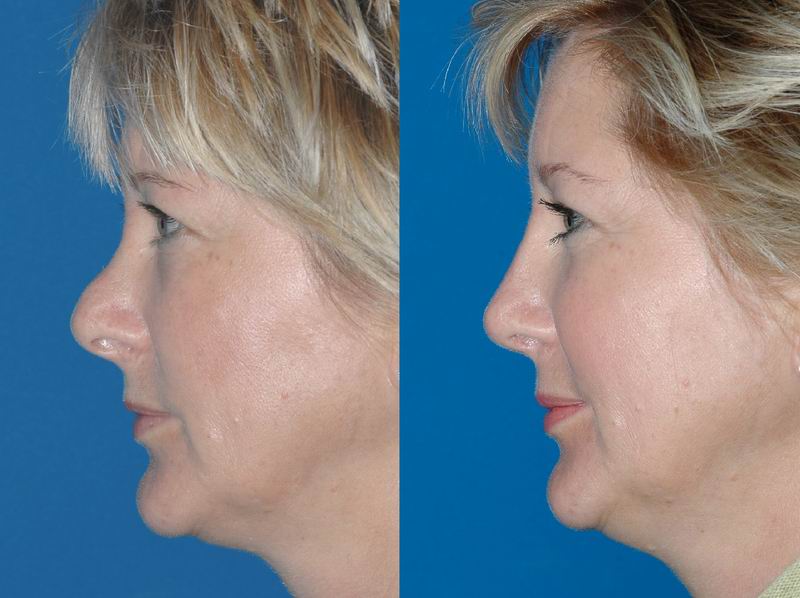
Revision rhinoplasty by Seattle facial plastic surgeon Dr. Sam Naficy. * Individual results may vary.
Asian rhinoplasty
Asian rhinoplasty differs from rhinoplasty typically performed on Caucasian patients in a fundamental way: it is usually an operation of augmentation rather than reduction. The goal is an attractive Asian nose — not a Caucasian nose on an Asian face.
A low, flat bridge lacking definition is common, which weakens the upper half of the nose relative to the tip and, on front view, fails to cast the shadows that define the sidewalls. Asian noses also tend to have weaker tip cartilage and often thicker skin, producing tips that lack definition and tend to droop. The standard Caucasian tip techniques — trimming and suturing cartilage — do not work well here. Dr. Naficy uses techniques that build tip support and make the tip taller, and therefore narrower.
Full detail: Asian Rhinoplasty.
What about preservation rhinoplasty?
Preservation rhinoplasty — sometimes called dorsal preservation, let-down, or push-down — lowers the bridge by removing bone and cartilage from beneath it and settling the existing dorsum downward, rather than reducing the dorsum from above and rebuilding it. Its appeal is that the natural dorsal lines are kept intact.
It is a genuine advance for a specific patient: a straight nose with a smooth hump and a good existing dorsal aesthetic line. It is less suited to crooked noses, noses needing significant tip restructuring, and revision cases — which is most of what a specialist rhinoplasty practice sees. Dr. Naficy uses preservation techniques selectively where the anatomy suits them, and structural techniques otherwise. Be cautious of any practice that presents a single technique as the answer for every nose.
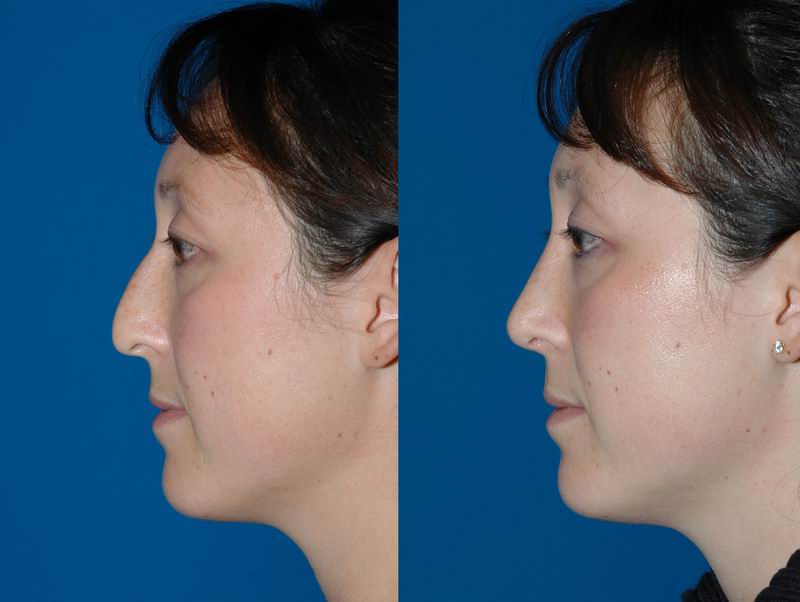
Asian rhinoplasty by Seattle facial plastic surgeon Dr. Sam Naficy. * Individual results may vary.
What type of anesthesia is used?
Rhinoplasty is performed under general anesthesia or IV sedation, administered by a dedicated anesthesia provider who will discuss which is appropriate for your health status and the planned procedure. With either, heart rate, blood pressure, breathing, and oxygen levels are monitored continuously.
General anesthesia means you are completely asleep, with an intravenous line and a breathing tube. IV sedation, also called monitored anesthesia care, delivers sedation and pain medication through an IV while the surgeon places numbing medication in the surgical area.
Surgery is performed in our on-site surgery center, which is Medicare-certified and Washington State–accredited. Our anesthesia team has more than 50 years of combined experience, and all providers also hold appointments at the University of Washington or other regional medical centers.
Anesthesia guidelines [21kb PDF] · Post-operative care instructions [18kb PDF]
What are the risks of rhinoplasty?
With modern technique and advanced anesthesia, rhinoplasty is a safe procedure. It is still surgery, and every patient should understand the risks before consenting.
More common, and usually temporary:
- Swelling, particularly of the tip, which resolves gradually over 6 to 18 months
- Bruising around the eyes, generally resolved within 7 to 10 days
- Nasal congestion during early healing
- Numbness of the nasal tip, typically resolving over weeks to months
Less common:
- Bleeding. The main short-term risk. Nosebleeds can occur in the early days after surgery and are usually managed conservatively.
- Nasal obstruction. The main long-term risk, and the reason a nose should not be made too small or too narrow. Over-reduction of tip and sidewall cartilage can collapse the internal or external nasal valve and impair breathing — sometimes years later.
- Contour irregularity — a visible or palpable bump, edge, or asymmetry as swelling resolves.
- Persistent asymmetry. No face is symmetric before surgery, and no nose is perfectly symmetric after it.
- Poor scarring at the columellar incision in the open approach.
- Infection — uncommon, treated with antibiotics.
Revision rate. Rhinoplasty has the highest revision rate of any facial cosmetic procedure. Because healing is unpredictable and millimetres are visible, a proportion of patients — in any surgeon's hands — will want a refinement. Ask any surgeon directly what their revision rate is and what their policy is if a revision is needed.
Rare: septal perforation, altered sense of smell, anesthesia complications, and the need for grafting from ear or rib in a later revision.
Risk is reduced by careful patient selection, preserving structural support rather than only removing tissue, complete nicotine cessation, and disclosing all medications and supplements including aspirin, fish oil, and vitamin E.
How much does rhinoplasty cost?
At Naficy Plastic Surgery, primary rhinoplasty ranges from $20,000 to $35,000. For national reference, the American Society of Plastic Surgeons reports a 2024 surgeon fee range of $7,500 to $12,500 for rhinoplasty across all member surgeons; that figure excludes anesthesia and facility fees, and reflects the full range of practices from occasional to specialist.
Cost depends on the complexity of the work, whether septal or airway correction is included, whether grafting is required, and operative and anesthesia time. Quoted fees are itemized in writing at consultation, covering surgeon, anesthesia, facility, and follow-up care. Financing is available through PatientFi.
Rhinoplasty quotes are among the least comparable in cosmetic surgery, because the operations behind them differ enormously. A hump reduction through a closed approach and a structural rhinoplasty with cartilage grafting and airway correction are not the same procedure. Ask what specifically will be done, how often the surgeon performs rhinoplasty, and what happens if a revision is needed.
Fees & payment policies · Financing
Why choose a rhinoplasty specialist?
Rhinoplasty rewards volume more than almost any operation in cosmetic surgery. It is unforgiving of small errors, healing is variable, and judgment is built case by case.
Dr. Naficy performs 150 to 180 rhinoplasty procedures each year. For context, the American Society of Plastic Surgeons reports 48,423 rhinoplasty procedures performed by its 9,000+ member surgeons in 2024 — an average of approximately five to six per surgeon per year.
His practice has been devoted exclusively to facial plastic surgery for 25 years. He is certified by the American Board of Facial Plastic and Reconstructive Surgery (ABFPRS), graduated first in his class from the University of Washington School of Medicine, and completed both his residency and fellowship at the University of Michigan. He has been recognized as a top doctor by Seattle Magazine. Patients travel from across the United States and internationally for nasal surgery here.
Published work on nasal surgery:
- Naficy S, Baker SR. Lengthening the short nose. Arch Otolaryngol Head Neck Surg. 1998;124(7):809–13. PMID 9677119
- Co-author of seven chapters in Principles of Nasal Reconstruction (Springer, 2nd ed.), including Structural Support, Cartilage Grafts, Bone Grafts, Refinement Techniques, and Complications and Management. View on Springer
When choosing a rhinoplasty surgeon, ask how many rhinoplasties they perform each year, ask to see before-and-after photographs of patients whose starting anatomy resembles yours, and ask what their approach is to revision if one becomes necessary.
About Dr. Sam Naficy, MD, FACS
Rhinoplasty before and after photos
This gallery contains representative before and after images of rhinoplasty procedures performed by Dr. Sam Naficy. Click any thumbnail to enter the slide show. The text accompanying each photograph describes the details of the procedures performed.
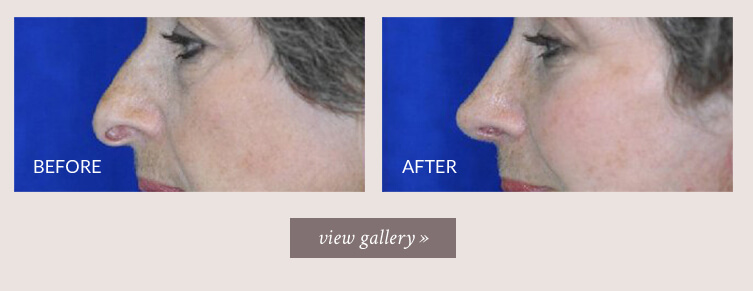
* Individual results may vary.
Frequently asked questions
Does rhinoplasty hurt?
Most patients describe congestion and pressure rather than pain. Because no packing is placed inside the nose, the most uncomfortable part of traditional rhinoplasty recovery is avoided entirely. Discomfort is typically managed with acetaminophen after the first day or two.
When will I look normal?
Presentable at about one week, when the splint comes off. Normal to others at about two months. The tip continues to refine for a year or more, and longer in thicker skin.
Will the open rhinoplasty scar show?
The columellar incision typically heals to a fine line that is difficult to find on close inspection. It sits on the underside of the nose between the nostrils, not on any surface anyone views directly.
Can rhinoplasty fix my breathing?
Yes. A deviated septum, collapsed nasal valve, and enlarged turbinates can all be corrected during the same operation. Combining cosmetic and functional correction is the most common form of rhinoplasty performed here.
Will insurance cover it?
Cosmetic rhinoplasty is not covered. Functional septal surgery performed for documented nasal obstruction may be covered in part. These are billed separately when performed together.
How young is too young?
Facial growth should be complete — generally age 15 to 16 in women and 16 to 17 in men.
Do I need to have my nose broken?
When a hump is reduced, the bridge is left flat and wide unless the nasal bones are repositioned. That controlled repositioning is a planned, precise part of the operation, and is not comparable to a traumatic fracture.
What if I do not like the result?
Wait. Judging a rhinoplasty before a year is judging swelling. If a genuine refinement is needed after that, it is discussed openly — ask about revision policy at consultation.
Can filler be used instead of surgery?
Non-surgical rhinoplasty with filler can camouflage a small dorsal irregularity or add height at the radix, but it adds volume and cannot make a nose smaller or narrower. Filler in the nose also carries a rare but serious risk of vascular occlusion.
How long before I can wear glasses?
Glasses must be kept off the bridge or supported for several weeks after surgery, until the nasal bones are stable.
I am interested. What do I do next?
If you are considering rhinoplasty, we encourage you to complete the Surgical Consultation Intake Form. There is great variety in nose shapes and features, and each procedure must be custom tailored to get the best possible result. Dr. Naficy will evaluate your anatomy, tell you whether you are a suitable candidate, and inform you of the potential risks of the procedure.
Naficy Plastic Surgery & Rejuvenation Center — 1110 112th Ave. NE, Suite 150, Bellevue, WA 98004 · (425) 450-0880. Serving Bellevue, Seattle, Kirkland, Redmond, Medina, Mercer Island, and the greater Puget Sound region.
This page is for general education and does not constitute medical advice. Individual results vary. Written and medically reviewed by Sam Naficy, MD, FACS. Last reviewed August 2026.
What does “board certified” actually mean in facial plastic surgery?
Board certification tells you what a surgeon was trained and examined in. On its own, the phrase “board certified” does not say in which field. Certification exists across many specialties, and a certificate in another specialty is a genuine credential in that specialty. It is simply not the same thing as certification in facial plastic surgery. So the useful follow-up question is always: certified by which board, and in what?
For facial plastic surgery there are two boards to look for, and both publish free public tools that let you verify a surgeon yourself in under a minute.
| Board | What it certifies | Verify a surgeon |
|---|---|---|
| American Board of Facial Plastic and Reconstructive Surgery (ABFPRS) | Facial plastic and reconstructive surgery specifically. Certification requires that the surgeon already hold certification from an American Board of Medical Specialties board in either otolaryngology–head and neck surgery or plastic surgery, pass a two-day examination, and submit for peer review operative reports from a minimum of 100 facial plastic surgery procedures. | ABFPRS Physician Finder |
| American Board of Plastic Surgery (ABPS) | Plastic surgery of the entire body, including the face. ABPS is a member board of the American Board of Medical Specialties. | ABPS Verify Certification |
Why the ABFPRS requirement matters
The detail worth understanding is that ABFPRS certification cannot be the only board a surgeon holds. It is granted on top of an existing ABMS certification in one of the two surgical specialties whose residency training covers facial plastic surgery. An ABFPRS diplomate is double boarded by definition. Those two qualifying pathways — otolaryngology–head and neck surgery, and plastic surgery — are both represented at this practice, and both of our facial surgeons hold certification from two boards rather than one. The 100-case peer review is also specific: the operative reports submitted must be facial plastic surgery, not surgery generally.
What to ask, and how to check
- Which board certified you, and in what specialty? Not simply “are you board certified.”
- Is that board a member of the American Board of Medical Specialties? Boards exist with similar-sounding names that are not ABMS member boards.
- Where do you hold hospital operating privileges, and for this procedure? Hospital privileges are granted by peer review against training.
- How many of these do you perform each year? Certification is a floor, not a measure of current volume.
- Verify it yourself. Both boards above let you search by surgeon name. The ABFPRS states that its website is a primary source of verification.
The surgeons at this practice, and how to verify them
| Surgeon | Board certification | Residency pathway |
|---|---|---|
| Sam Naficy, MD, FACS | American Board of Facial Plastic and Reconstructive Surgery American Board of Otolaryngology – Head and Neck Surgery |
Otolaryngology – head and neck surgery, followed by facial plastic surgery fellowship at the University of Michigan |
| Keith Hurvitz, MD, FACS | American Board of Plastic Surgery American Board of Otolaryngology – Head and Neck Surgery |
Otolaryngology – head and neck surgery residency at USC, followed by a general plastic surgery residency at UC Irvine |
Each of these certifications can be confirmed through the verification links above, or with the certifying boards directly. We would encourage you to check ours, and to check the credentials of any other surgeon you consult.