Forehead Reduction
Forehead reduction, also called hairline lowering or hairline advancement, moves the hair-bearing scalp forward to shorten a high forehead. The hairline can typically be advanced up to 2 centimetres, though how much is achievable depends on the mobility of your scalp. The operation takes up to 2 hours under IV sedation or general anesthesia and costs $15,000. Sam Naficy, MD, FACS performs 5 to 7 of these each year in Bellevue, Washington — a deliberately small number, because not everyone is a good candidate.
What is forehead reduction surgery?
A high hairline makes the forehead appear disproportionately tall. It is usually genetic rather than a sign of hair loss, and it is a lifelong feature — most patients who seek this operation have been aware of it since childhood and have spent years styling around it with fringes and layers.
Forehead reduction addresses it directly. An incision is made along the hairline, the hair-bearing scalp is advanced forward, and the excess forehead skin is removed. The result is an immediately shorter forehead and a hairline in a lower, more balanced position.
It is performed predominantly in women. Men are generally poor candidates because the male hairline continues to recede with age, which would undo the result and leave the scar exposed.
How much can the hairline actually be lowered?
Up to 2 centimetres in most cases. This is the number patients want and the one most pages avoid giving, so it is worth explaining what it depends on.
- Scalp mobility. The single biggest factor. The scalp has to stretch forward to cover the ground it gains, and how much it will move varies considerably between people. A mobile scalp allows a greater advancement; a tight one limits it regardless of how high the hairline sits. This is assessed by hand at consultation, and it is the reason no honest figure can be promised before examining you.
- Whether a brow lift is being done at the same time. These two operations use the same tissue in opposite directions — a brow lift pulls the brow upward, forehead reduction pulls the scalp downward. Doing both means dividing the available scalp movement between them, so combining them reduces how far the hairline can come down.
Two centimetres does not sound like much written down. On a forehead it is a substantial change, and it is generally the difference patients are looking for.
Will the scar show? — the question that matters
This is the reason most people hesitate, and it deserves a direct answer rather than reassurance.
There is an incision along the hairline. It is permanent. What determines whether it is noticeable is how it is closed.
We use both trichophytic and irregular-edge closure techniques.
- Trichophytic closure means the incision is bevelled so that it cuts across the hair follicles just beneath the surface rather than between them. Those follicles survive and continue to grow — and the new hair grows through and in front of the scar line. Rather than a bare line at the hairline's edge, hair emerges from the scar itself, which is what camouflages it.
- Irregular-edge closure means the incision is deliberately made as an irregular, wavy line rather than a straight one. A straight line reads as artificial to the eye because nothing in nature is straight; an irregular border reads as a hairline.
The timeline: the incision is pink and visible in the early weeks. By around three months the scar is generally well healed and inconspicuous. Until that point, hair can be styled forward to cover the healing incision — which is straightforward, since the hair growing immediately behind it is your own and full length.
We would rather tell you there is a real scar and explain how it is managed than imply there is not one.
Who is a good candidate for forehead reduction?
- A high hairline that is genetic rather than receding. The hairline needs to be stable, not actively moving backward.
- Good scalp mobility — the factor that determines what is achievable, assessed by examination.
- Good hair density at the hairline. The advanced hairline needs enough hair to look natural in its new position.
- Female, in the large majority of cases, for the reasons above.
- Good general health, no nicotine use, and realistic expectations about a scar that takes about three months to settle.
Who is not a good candidate?
We perform 5 to 7 of these a year, and the reason the number is small is that a good proportion of people who ask are not suitable. The common reasons:
- A tight scalp. If the scalp will not move, the hairline cannot be advanced meaningfully, and there is no technique that changes that. This is the most frequent reason to decline.
- Active or progressive hair loss. Advancing a hairline that is going to recede again puts the scar in an exposed position. This is why most men are unsuitable.
- Thin hair density at the hairline. A sparse hairline moved forward is still a sparse hairline, and the scar is harder to camouflage. Hair grafting is the better answer — see below.
- The problem is really brow position, not forehead height. A heavy, descended brow can make a forehead look tall. That needs a brow lift, which moves the brow up rather than the hairline down.
- You cannot accept a permanent hairline incision. Entirely reasonable, and worth knowing about yourself before proceeding.
- Nicotine use in any form, which compromises healing at the incision and worsens the scar. Cessation required for at least three weeks before and after.
- A history of keloid or hypertrophic scarring.
Forehead reduction or hair grafting — which do I need?
These solve different problems and are frequently confused.
| Forehead reduction | Hair grafting | |
|---|---|---|
| The problem it solves | Forehead height — the hairline sits too high | Hair density — the hairline is thin, sparse or irregular |
| What it does | Moves the existing hair-bearing scalp forward as a unit | Transplants individual follicles to build density in front |
| Result timing | Immediate | Gradual — transplanted hair grows in over months |
| Amount of change | Up to 2 cm in one operation | Limited by donor supply; may need more than one session |
| Scar | A hairline incision, camouflaged by trichophytic closure | No hairline incision, but there will be incisions for hair graft harvest |
The rule of thumb: if the hairline is dense but too high, forehead reduction. If density is the problem rather than height, grafting. Some patients benefit from both — advancement to shorten the forehead, then grafting to soften and refine the new hairline.
How is forehead reduction performed?
The operation takes up to 2 hours under IV sedation or general anesthesia.
- Planning. The new hairline position is marked with you sitting upright, and scalp mobility is assessed to confirm how far advancement is realistic.
- Incision. Made along the hairline as a deliberately irregular line, and bevelled so it passes through the hair follicles rather than between them.
- Release. The scalp is released so it can move forward. This is the step that determines how much advancement is possible.
- Advancement and excision. The scalp is drawn forward, the excess forehead skin removed, and the new hairline set in position.
- Closure in layers, so tension is carried by the deep sutures rather than the skin — skin tension is what widens a scar.
What is recovery like?
| Time after surgery | What to expect |
|---|---|
| Days 1–3 | Swelling of the forehead, which can track down toward the eyes. Discomfort is manageable. Rest with the head elevated. |
| Days 4–10 | Swelling settles and bruising fades. Sutures or staples removed. Hair can be styled forward over the incision. |
| Weeks 2–6 | Presentable, with the incision still pink but coverable. Numbness behind the incision is expected and normal. |
| Month 3 | The scar is generally well healed and inconspicuous but continues to look better up to 6 months. Hair grows through the trichophytic closure. |
| Months 3–12 | Scar continues to mature. Sensation behind the incision returns gradually. |
Will my scalp be numb, and for how long?
Yes, behind the incision, and it is expected. The nerves supplying sensation to the scalp run forward through this area and are inevitably affected.
Numbness can last from about a month up to a year, and it typically returns. Most patients find it fades gradually and stop noticing it well before it has fully resolved. Permanent numbness in a patch of scalp is possible but uncommon.
Can it be combined with a brow lift?
Yes, and it is a common pairing — but there is a trade-off worth understanding before you decide.
A brow lift raises the brow; forehead reduction lowers the hairline. Both shorten the forehead, but they pull the same tissue in opposite directions. Doing both means the available scalp movement is shared between them, so combining a brow lift reduces how far the hairline can be advanced.
Which matters more depends on your anatomy. If the brow is heavy and low, lifting it may achieve more than lowering the hairline would. If the brow sits well and the forehead is simply tall, advancement alone gives the greater change. This is a genuine planning decision and it gets made at consultation, not in advance.
What else is combined with forehead reduction?
With hair grafting: advancement first to shorten the forehead, grafting afterward to refine and soften the new hairline, particularly at the temples.
With deep plane facelift: where the whole upper and lower face is being addressed together.
With upper eyelid surgery: the upper third of the face reads as a unit.
What are the risks?
Expected: forehead swelling that can track toward the eyes, bruising, tightness, and numbness behind the incision.
Less common:
- A visible or widened scar. The principal risk. Minimised by trichophytic and irregular-edge closure and by layered, tension-free repair — and made considerably worse by nicotine.
- Hair loss along the incision (shock loss). Usually temporary, with regrowth over several months.
- Less advancement than hoped, where scalp mobility proves more limited than anticipated.
- Prolonged or permanent numbness in a patch of scalp behind the incision.
- Asymmetry of the new hairline.
- Itching during healing, which is common and settles.
- Infection or bleeding — uncommon; the scalp has an excellent blood supply.
How much does forehead reduction cost?
At Naficy Plastic Surgery, forehead reduction surgery is $15,000. Operating room and anesthesia fees are additional.
Fees are itemized in writing at consultation. Financing is available through PatientFi. Forehead reduction performed for cosmetic reasons is not covered by insurance.
Fees & payment policies · Financing
Why choose a facial plastic surgeon for hairline lowering?
Two judgements determine the outcome, and both are made before the first incision: whether your scalp will move far enough to make the operation worthwhile, and where the new hairline should sit to look like it was always there.
The second is harder than it sounds. A hairline placed too low or too straight reads as surgical immediately. The irregular contour, the temple angles, and the density gradient at the front all have to look unplanned.
Dr. Naficy performs 5 to 7 forehead reductions each year, and declines a substantial proportion of those who ask because scalp mobility or hair density makes the result unlikely to satisfy. His practice has been devoted exclusively to facial plastic surgery since 2000. He is certified by the American Board of Facial Plastic and Reconstructive Surgery (ABFPRS), graduated first in his class from the University of Washington School of Medicine, completed residency and fellowship at the University of Michigan, and has been on the clinical faculty of the University of Washington since 1999.
About Dr. Sam Naficy, MD, FACS
What type of anesthesia is used?
Forehead reduction is performed under IV sedation or general anesthesia, administered by a dedicated anesthesia provider. Surgery takes place in our on-site surgery center, which is Medicare-certified and Washington State–accredited. Our anesthesia team has more than 50 years of combined experience, and all providers also hold appointments at the University of Washington or other regional medical centers.
Anesthesia guidelines [21kb PDF]
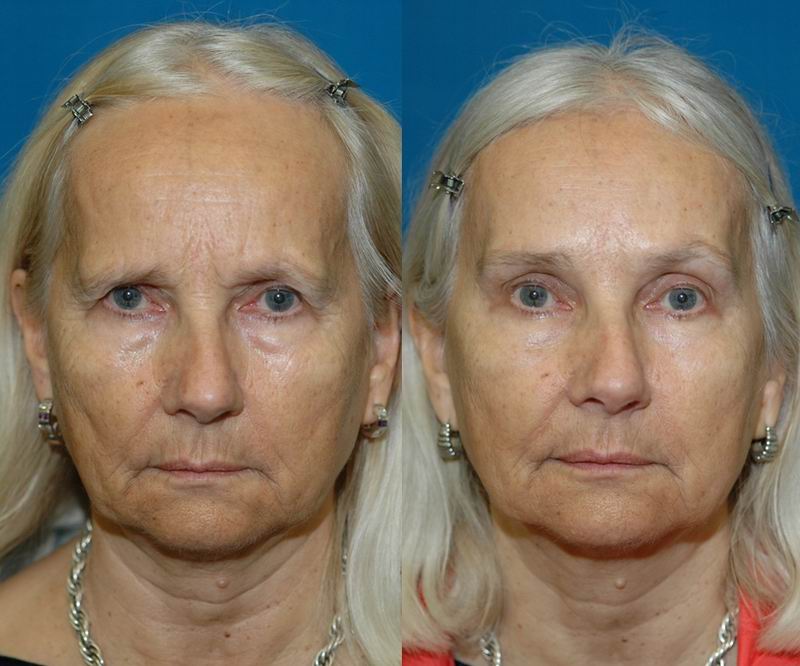
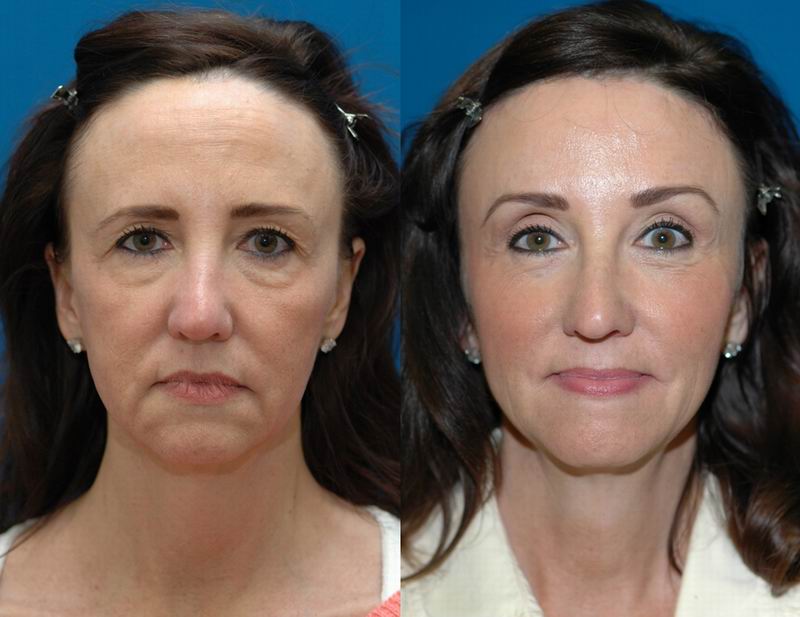
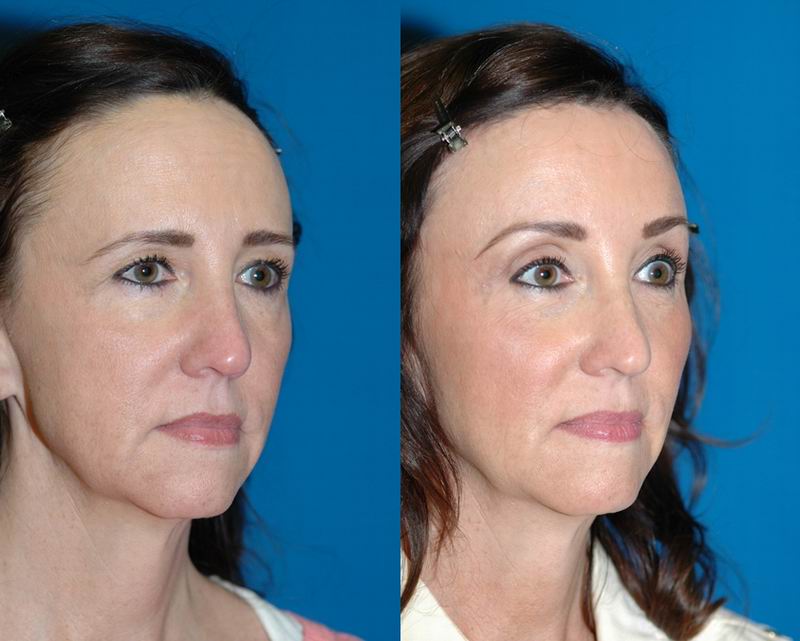
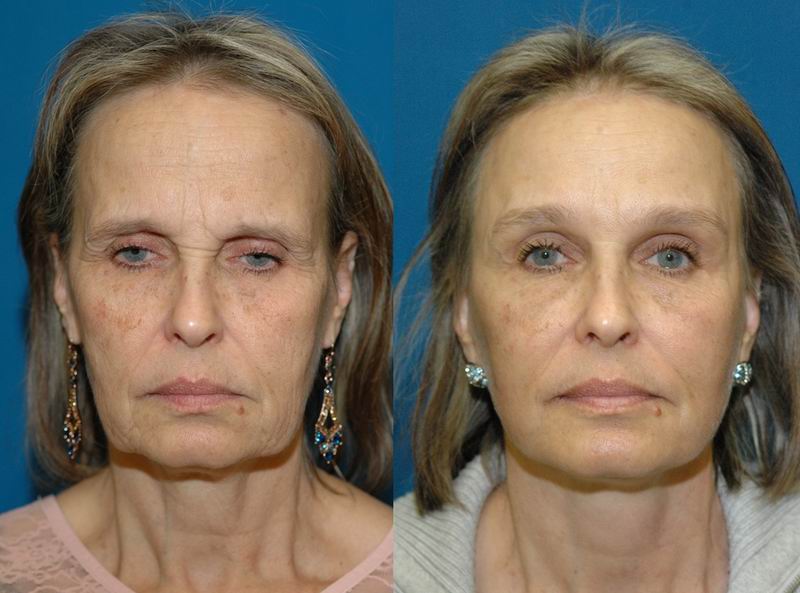
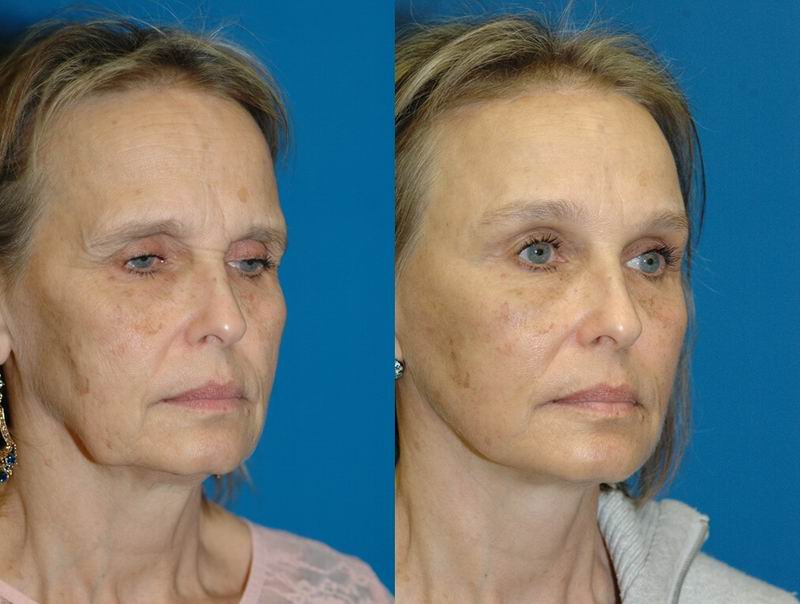
Forehead reduction before and after photos
Before and after photographs of forehead reduction and hairline lowering by Dr. Sam Naficy. Individual results vary.
Frequently asked questions about forehead reduction
How much can my hairline be lowered?
Up to 2 centimetres in most cases. The limiting factor is scalp mobility, which is assessed by examination, and whether a brow lift is being performed at the same time — combining the two divides the available movement.
Will the scar be visible?
There is a permanent incision along the hairline, but it is closed using trichophytic and irregular-edge techniques so hair grows through and in front of it and the border is irregular rather than straight. By around three months it is generally well healed and inconspicuous. Hair can be styled forward to cover it before then.
What is trichophytic closure?
The incision is bevelled so it passes through hair follicles just beneath the surface rather than between them. Those follicles survive and grow hair through the scar itself, which camouflages the line.
How much does forehead reduction cost?
At our practice, $15,000, with operating room and anesthesia fees additional.
How long does the surgery take?
Up to 2 hours, under IV sedation or general anesthesia.
Is my scalp going to be numb?
Behind the incision, yes, and it is expected. It can last from about a month up to a year and typically returns. Permanent numbness in a patch of scalp is possible but uncommon.
Can men have forehead reduction?
Usually not. The male hairline continues to recede with age, which would undo the result and leave the incision exposed. It is performed predominantly in women with a stable, genetically high hairline.
Should I have hair transplants instead?
If the problem is hair density rather than forehead height, yes — grafting builds density where advancement cannot. If the hairline is dense but sits too high, advancement is the better operation. Some patients benefit from both.
What if my scalp is too tight?
Then meaningful advancement is not possible, and we will tell you so rather than perform an operation that will disappoint. This is the most common reason we decline.
Can I have a brow lift at the same time?
Yes, though it reduces how far the hairline can come down, since both use the same scalp movement in opposite directions. Which gives you more depends on whether your brow position or your forehead height is the dominant issue.
When can I wash my hair or style it normally?
You will be given specific instructions at surgery. Most patients are styling hair forward over the incision within the first week or two, which is what makes the early healing period manageable.
Does forehead reduction last?
Yes. The hairline is moved to a new permanent position. It does not migrate back, provided your hairline was stable rather than receding to begin with.
Next steps
A consultation for forehead reduction is largely a physical assessment: how mobile your scalp is, how dense the hair at your hairline, and whether your forehead height or your brow position is the real issue. Those findings determine whether the operation is worth doing and how much change is realistically available — and in a fair number of cases the honest answer is that it is not the right procedure.
Naficy Plastic Surgery & Rejuvenation Center is located in Bellevue, Washington, and serves patients from Seattle, the Eastside, and throughout the Pacific Northwest.
Request a consultation · Ask a question · Out of town patients
Medically reviewed by Sam Naficy, MD, FACS, board-certified by the American Board of Facial Plastic and Reconstructive Surgery.