Buccal Fat Pad Removal
Buccal fat removal takes out the deep fat pad in the mid-cheek to slim the lower face. It is permanent and cannot be undone, and because the face continues to lose volume with age, over-resection produces a gaunt, hollow, prematurely aged appearance in later decades. Most people who ask for this operation are not candidates for it. Sam Naficy, MD, FACS performs 10 to 12 buccal fat removals each year in Bellevue, Washington — a deliberately small number — at a fee of $5,500 whether performed alone or combined with another procedure.
What is the buccal fat pad?
The buccal fat pad (pronounced buckle) is a discrete, encapsulated mass of deep fat sitting in the mid-cheek, between the facial muscles. It is a distinct anatomical structure, not the same as the subcutaneous fat just under the skin, and it is not something diet or exercise reduces.
In some people it is genuinely large, producing full, rounded lower cheeks that persist regardless of body weight. In most people it is a normal-sized structure doing a normal job.


Buccal fat pad removal by Sam Naficy, MD. * Individual results may vary.


Buccal fat pad removal by Sam Naficy, MD. * Individual results may vary.
Read this before you decide
Buccal fat removal is the most requested and least appropriate operation in facial plastic surgery at present, and the reason is worth stating plainly.
The fat does not come back. The buccal fat pad is removed, not reduced or repositioned. There is no procedure that restores it. Grafted fat can be placed in the area later, but it is not the same tissue in the same anatomical plane, and correcting an over-resected cheek is considerably harder than declining to over-resect it.
The face loses volume for the rest of your life. Facial fat and bone diminish steadily with age. A cheek that looks pleasantly sculpted at 27 is working from a smaller reserve at 45 and a smaller one still at 60. Removing structural fat accelerates a process that is already underway. This is why the same patients who requested buccal fat removal in their twenties are the ones requesting fat grafting in their forties.
Much of what people want from it comes from somewhere else. The defined jawline seen in photographs is usually produced by good projection of the chin and jaw, a tight neckline, and low body fat — not by absent buccal fat. Removing the fat pad from a face whose proportions are already correct does very little, and from a face whose proportions are wrong it does not address the actual problem.
Approximately 10 to 12 of these operations are performed here each year. That number is low because most people who ask are told no, and the reasons are set out below.
Who is a good candidate for buccal fat removal?
Three conditions must all be met. Any one of them missing is a reason to decline.
| Requirement | Why it matters |
|---|---|
| The buccal fat must be genuinely excessive | Not simply present — everyone has buccal fat. The pad must be large enough that it is the actual cause of the fullness. Removing a normal-sized pad produces little change now and hollowing later. |
| Chin and jaw contour must be normal | A weak or recessed chin makes the cheeks appear fuller by comparison. In that patient the cheeks are not the problem, and removing buccal fat will not fix it. Chin augmentation is the operation that addresses it, often with a far greater effect on the jawline than buccal fat removal would have produced. |
| BMI must be at an ideal weight | Generalised facial fullness from body weight is not buccal fat. Operating on a face that is full because the body is heavier removes the wrong tissue, and any later weight loss then compounds the hollowing. |
In addition: good general health, no nicotine use, and a clear understanding that the change is permanent and modest.
Who is not a candidate for buccal fat removal?
These are the reasons patients are declined here.
- You are under 20. Facial fullness in the late teens and early twenties is substantially normal youthful fat that redistributes on its own over the following years. Operating on it removes structure that would have resolved without surgery. There is no reason to do this early, and every reason not to.
- Your buccal fat is normal in size. The most common reason. If the pad is not the cause of the fullness, removing it will not correct the fullness.
- Your chin is weak or recessed. The cheeks look full because the lower face lacks projection. Treating the cheeks is treating the wrong structure.
- Your BMI is above your ideal weight. Address weight first, then reassess. Facial proportions change substantially with body composition.
- You are naturally thin or have a narrow face. There is no reserve to remove, and hollowing is close to certain.
- You want the look from a particular photograph. Those faces generally have strong skeletal projection and low body fat. That look is not stored in the buccal fat pad.
- You have any facial wasting or plan significant weight loss.
- You cannot accept that it is irreversible. This is not a filler that dissolves or a change that softens. It is the permanent removal of an anatomical structure.
Being told no is a legitimate outcome of a consultation for this procedure, and it is the outcome more often than not.
What are the alternatives to buccal fat removal?
The right answer for most people who ask about buccal fat is one of these instead.
- Chin augmentation — where the jawline lacks projection. This creates definition by building the skeletal frame, rather than by removing soft tissue, and it is reversible.
- Neck and jawline liposuction — where the fullness is subcutaneous fat under the jaw and in the neck rather than deep cheek fat. This is a different fat compartment entirely, and it is frequently the one actually responsible.
- Weight optimisation — where facial fullness reflects body composition. Faces change considerably with a modest change in weight.
- Doing nothing — a serious recommendation for patients under about 25, whose faces are still redistributing fat naturally.
How is buccal fat removal performed?
The operation takes approximately 30 minutes and is performed under IV sedation or general anesthesia.
- Incision. A small incision is made inside the mouth, on the inner surface of the cheek. There is no external scar.
- Exposure. The capsule surrounding the buccal fat pad is opened and the pad is allowed to present itself into the wound.
- Conservative resection. A measured portion is removed — deliberately less than could be taken. The pad sits close to the branches of the facial nerve and the parotid duct, and the resection is limited both for that reason and because under-resection can be revised while over-resection cannot.
- Closure with dissolving sutures inside the mouth.
The removed fat can be re-injected elsewhere in the face where volume is wanted — the temples or the tear troughs, for instance. This is worth discussing, since it uses tissue that would otherwise be discarded.
What is buccal fat removal recovery like?
Recovery is short and the main constraints relate to the incision being inside the mouth.
| Time after surgery | What to expect |
|---|---|
| Days 1–3 | Swelling of the cheeks, which peaks early and makes the face look fuller rather than slimmer. Soft diet and salt-water rinses after eating. Discomfort is mild. |
| Days 4–7 | Swelling begins to settle. Most patients are presentable and back to work. |
| Weeks 2–4 | Most swelling resolved. Normal diet resumed. Internal sutures dissolve. |
| Months 1–3 | Contour continues settling. The change becomes apparent as residual swelling clears. |
| Months 3–6 | Final result. The change is subtle by design. |
Note the direction of travel: the face looks fuller for the first weeks, not slimmer. Patients who expected an immediate change are frequently alarmed by this.
What are the risks of buccal fat removal?
More common, and temporary: swelling, mild discomfort, temporary difficulty with a normal diet, and transient asymmetry as swelling resolves at different rates on the two sides.
The principal risk is over-resection. Taking too much produces a hollow, gaunt mid-face. It may look acceptable or even desirable in the first year, and it becomes progressively worse over subsequent decades as normal age-related volume loss compounds it. It cannot be reversed, and correction requires fat grafting that does not fully replicate the original anatomy.
Less common:
- Facial nerve injury — branches of the facial nerve run near the buccal fat pad. Injury is uncommon and usually temporary, but weakness of facial movement can occur.
- Parotid duct injury — the duct draining the parotid salivary gland passes through the area.
- Bleeding or haematoma.
- Infection — the incision is inside the mouth, which is not sterile, though this location heals well.
- Persistent asymmetry.
- Under-correction, where too little was removed. This is the preferable error, and it can be revised.
- Trismus — temporary limitation in opening the mouth fully.
How much does buccal fat removal cost?
At Naficy Plastic Surgery, buccal fat removal is $5,500, whether performed on its own or combined with another procedure. Operating room and anesthesia fees are additional for a standalone procedure and are shared when combined.
Fees are itemized in writing at consultation. Financing is available through PatientFi. Buccal fat removal performed for cosmetic reasons is not covered by insurance.
Fees & payment policies · Financing
Why choose a facial plastic surgeon for buccal fat removal?
The technical part of this operation is not difficult. The judgement is the entire procedure: deciding whether the patient should have it at all, and if so, how little to take.
A surgeon who performs this operation on everyone who requests it will produce a number of gaunt faces a decade from now. Dr. Naficy performs 10 to 12 buccal fat removals each year — a small number, because most people who ask are not candidates.
His practice has been devoted exclusively to facial plastic surgery since 2000. He is certified by the American Board of Facial Plastic and Reconstructive Surgery (ABFPRS), graduated first in his class from the University of Washington School of Medicine, and completed both his residency and fellowship at the University of Michigan. He has been on the clinical faculty of the University of Washington since 1999 and has been recognized in Seattle Magazine's Top Doctors list. He has also published peer-reviewed research on facial fat grafting — the operation frequently needed to correct over-resection performed elsewhere.
About Dr. Sam Naficy, MD, FACS
What type of anesthesia is used?
Buccal fat removal is performed under IV sedation or general anesthesia, administered by a dedicated anesthesia provider. Surgery is performed in our on-site surgery center, which is Medicare-certified and Washington State–accredited. Our anesthesia team has more than 50 years of combined experience, and all providers also hold appointments at the University of Washington or other regional medical centers.
Anesthesia guidelines [21kb PDF]
Buccal fat removal before and after photos
Before and after photographs of buccal fat removal performed by Dr. Sam Naficy. Some patients had additional procedures; the caption accompanying each photograph describes what was done.
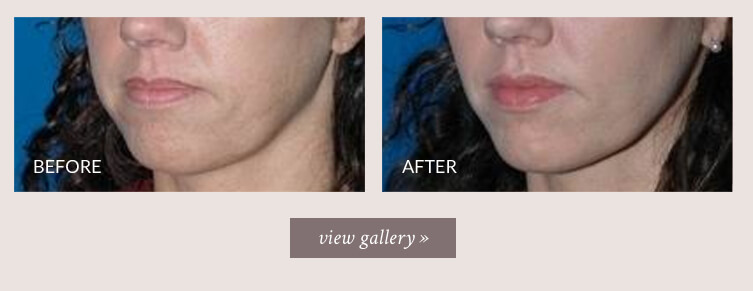
* Individual results may vary.
Frequently asked questions about buccal fat removal
Is buccal fat removal permanent?
Yes, and it is irreversible. The buccal fat pad is removed, not reduced. It does not grow back and there is no procedure that restores it. Fat can be grafted into the area later, but it does not replicate the original anatomy.
Will buccal fat removal make me look older later?
It can, and this is the central risk. The face loses fat and bone volume steadily with age. Removing structural fat in your twenties accelerates a process already in motion, and a result that looks sculpted at 30 can look gaunt and prematurely aged at 50. Conservative resection in a genuinely appropriate candidate mitigates this; over-resection guarantees it.
Am I too young for buccal fat removal?
If you are under 20, yes. Facial fullness at that age is largely normal youthful fat that redistributes naturally over the following years. Operating on it removes structure that would have resolved on its own.
Does buccal fat removal give you a defined jawline?
Not usually, and this is the most common misunderstanding. Jawline definition comes principally from the projection of the chin and jaw, the tightness of the neckline, and body fat. Buccal fat sits in the mid-cheek, above the jawline. If your jawline lacks definition, chin augmentation or neck liposuction will usually do far more.
Is there a scar from buccal fat removal?
No external scar. The incision is made inside the mouth on the inner cheek.
How long does buccal fat removal take?
About 30 minutes, under IV sedation or general anesthesia.
How long is recovery from buccal fat removal?
Most patients are presentable within about a week. Swelling makes the face look fuller for the first several days, not slimmer. The final contour takes three to six months to appear.
How much does buccal fat removal cost in Seattle?
At our practice, $5,500, whether performed alone or combined with another procedure. Financing is available through PatientFi.
Can buccal fat removal be reversed?
No. Fat grafting can add volume back to the area, but it is not the same tissue in the same plane, and the correction is imperfect. This asymmetry between how easy the removal is and how difficult the correction is, is the reason for conservative resection.
What can be done with the removed fat?
It can be re-injected elsewhere in the face where volume is wanted, such as the temples or tear troughs, rather than discarded.
Does buccal fat removal help a round face?
Only if the buccal fat pad is genuinely the cause of the roundness. Facial roundness more often reflects body weight, skeletal proportion, or a weak chin. Those causes are not improved by removing buccal fat, and the operation will disappoint.
Does insurance cover buccal fat removal?
Not when performed for cosmetic reasons.
Why do so few surgeons decline this procedure?
Demand for buccal fat removal is high and the operation is technically straightforward, so it is commonly performed on patients who would be better served by something else or by nothing. The consequences appear a decade or more later, well after the patient has left the practice.
What does “board certified” actually mean in facial plastic surgery?
Board certification tells you what a surgeon was trained and examined in. On its own, the phrase “board certified” does not say in which field. Certification exists across many specialties, and a certificate in another specialty is a genuine credential in that specialty. It is simply not the same thing as certification in facial plastic surgery. So the useful follow-up question is always: certified by which board, and in what?
For facial plastic surgery there are two boards to look for, and both publish free public tools that let you verify a surgeon yourself in under a minute.
| Board | What it certifies | Verify a surgeon |
|---|---|---|
| American Board of Facial Plastic and Reconstructive Surgery (ABFPRS) | Facial plastic and reconstructive surgery specifically. Certification requires that the surgeon already hold certification from an American Board of Medical Specialties board in either otolaryngology–head and neck surgery or plastic surgery, pass a two-day examination, and submit for peer review operative reports from a minimum of 100 facial plastic surgery procedures. | ABFPRS Physician Finder |
| American Board of Plastic Surgery (ABPS) | Plastic surgery of the entire body, including the face. ABPS is a member board of the American Board of Medical Specialties. | ABPS Verify Certification |
Why the ABFPRS requirement matters
The detail worth understanding is that ABFPRS certification cannot be the only board a surgeon holds. It is granted on top of an existing ABMS certification in one of the two surgical specialties whose residency training covers facial plastic surgery. An ABFPRS diplomate is double boarded by definition. Those two qualifying pathways — otolaryngology–head and neck surgery, and plastic surgery — are both represented at this practice, and both of our facial surgeons hold certification from two boards rather than one. The 100-case peer review is also specific: the operative reports submitted must be facial plastic surgery, not surgery generally.
What to ask, and how to check
- Which board certified you, and in what specialty? Not simply “are you board certified.”
- Is that board a member of the American Board of Medical Specialties? Boards exist with similar-sounding names that are not ABMS member boards.
- Where do you hold hospital operating privileges, and for this procedure? Hospital privileges are granted by peer review against training.
- How many of these do you perform each year? Certification is a floor, not a measure of current volume.
- Verify it yourself. Both boards above let you search by surgeon name. The ABFPRS states that its website is a primary source of verification.
The surgeons at this practice, and how to verify them
| Surgeon | Board certification | Residency pathway |
|---|---|---|
| Sam Naficy, MD, FACS | American Board of Facial Plastic and Reconstructive Surgery American Board of Otolaryngology – Head and Neck Surgery |
Otolaryngology – head and neck surgery, followed by facial plastic surgery fellowship at the University of Michigan |
| Keith Hurvitz, MD, FACS | American Board of Plastic Surgery American Board of Otolaryngology – Head and Neck Surgery |
Otolaryngology – head and neck surgery residency at USC, followed by a general plastic surgery residency at UC Irvine |
Each of these certifications can be confirmed through the verification links above, or with the certifying boards directly. We would encourage you to check ours, and to check the credentials of any other surgeon you consult.
Next steps
A consultation for buccal fat removal is principally a diagnostic appointment: whether the buccal fat pad is genuinely the cause of the fullness you are seeing, or whether the actual issue is chin projection, neck contour, body weight, or simply youth. That assessment determines whether the operation is appropriate — and frequently it is not.
Naficy Plastic Surgery & Rejuvenation Center is located in Bellevue, Washington, and serves patients from Seattle, the Eastside, and throughout the Pacific Northwest.
Request a consultation · Ask a question · Out of town patients
Medically reviewed by Sam Naficy, MD, FACS, board-certified by the American Board of Facial Plastic and Reconstructive Surgery.